

How to Reduce Your Exposure to PFAS: 10 Practical Ways That Matter
Want to reduce your exposure to PFAS? Here are practical, realistic changes you can make to your food, water, cookware, clothing, personal care products, and more—without trying to eliminate every possible source.

Hasn’t this PFAS problem gone away yet? Unfortunately, no.
Not only do PFAS chemicals persist in the environment for a very long time, they’re still used in some consumer products. These “forever chemicals” can be found in some food packaging, cookware, clothing, personal care products, and other everyday items—and PFAS contamination remains a concern in some drinking water supplies.
The good news? You don’t need to eliminate every possible source of PFAS from your life. That’s not realistic, and it’s not the goal.
Instead, let’s focus on a few practical changes that can help reduce your exposure—without turning your life upside down.
In this article we’ll cover 10 ways to reduce your exposure to PFAS, from the water you drink and the food you eat to the products you use around your home.
At Mindful Momma we only endorse products we’ve personally researched, tested, and honestly love. We may receive commissions from affiliate links in this article including Amazon Affiliates. Full Disclosure
What Are PFAS?
Often known as “forever chemicals,” PFAS are synthetic chemicals that have been used since the 1940s to make products resistant to water, oil, grease, stains, and heat.
PFAS stands for per- and polyfluoroalkyl substances—a very large group of thousands of chemicals. They have been used in all kinds of everyday products, including some food packaging, nonstick cookware, water- and stain-resistant clothing, cosmetics, and other products designed to repel water or grease.
So why are we concerned about them? Many PFAS don’t break down easily in the environment, so they can persist in water and soil and can build up in wildlife and our bodies. Some PFAS can also stay in the human body for years.
Research has found associations between exposure to certain PFAS and health effects including increased cholesterol, changes in liver enzymes, reduced antibody response to some vaccines, and pregnancy-related effects including pregnancy-induced hypertension or preeclampsia and small decreases in birth weight. Exposure to PFOA has also been associated with kidney and testicular cancer. The ATSDR’s overview of PFAS health effects provides a good summary of what researchers currently know.
Of course, not all PFAS are the same, and we don’t have the same amount of research on every chemical in this huge group. Scientists are still learning about newer PFAS and how exposure to multiple PFAS may affect us.
That’s why I don’t think the goal should be to panic about every possible source of PFAS. Instead, let’s focus on the practical things we can do to reduce unnecessary exposure—without trying to overhaul our entire lives.

How Are We Exposed to PFAS?
PFAS are so widely used that it’s not always easy to know where we might encounter them. Exposure can happen through food, water, and everyday products, and there isn’t one single source that accounts for everyone’s exposure.
Some of the more common potential sources include:
- Food and food packaging: PFAS have been used in some grease-resistant food packaging, including certain wrappers, takeout containers, and other food-contact materials. PFAS can also enter food through environmental contamination.
- Drinking water: PFAS can get into groundwater and drinking water from industrial sites, firefighting foam, landfills, and other sources. Water can be an important source of exposure, particularly in communities with contaminated water supplies.
- Cookware and bakeware: Some nonstick coatings have historically been made with PFAS, including PTFE. Other types of cookware and bakeware use different materials and coatings.
- Clothing and textiles: PFAS have been used to give some clothing, carpets, upholstery, and outdoor gear water- or stain-resistant properties.
- Personal care and cosmetics: Certain cosmetics and personal care products may contain PFAS or PFAS-related ingredients, particularly products designed to be long-lasting, waterproof, or water-resistant.
- Household products: PFAS may also be found in products such as stain-resistant carpets and furniture, as well as other products designed to repel water, oil, or stains.
The important thing to remember is that exposure doesn’t mean you have to eliminate every product on this list. Some sources are more relevant than others depending on where you live and the products you use. The goal of the next section is to focus on practical ways to reduce exposure where you have the most control.

10 Ways to Reduce Your Exposure to PFAS
Once you know where PFAS can show up, the next question is: What can you actually do about it?
You don’t need to make your home completely PFAS-free—and realistically, you can’t control every source of exposure. But there are some simple, practical changes that can help reduce unnecessary exposure. Here are 10 places where I think it’s worth focusing your attention.
1. Filter Your Drinking Water
It was startling to learn that at least 45% of the nation’s tap water is estimated to contain one or more types of PFAS, according to a U.S. Geological Survey study. The study tested tap water from 716 locations across the country and found PFAS in both public water supplies and private wells.
So, one of your first steps should be to find out what’s in your local water supply. You can check your area using the EWG Tap Water Database, which provides information about contaminants detected in water systems around the country.
If PFAS are a concern in your area—or you simply want to reduce your exposure—you can choose a water filter that’s specifically designed to reduce PFAS. Not all water filters remove PFAS, so don’t assume that any basic pitcher or faucet filter will do the job. Look for a filter that specifically claims to reduce PFAS and check its performance data or certification before you buy.
Not sure where to start? I’ve put together a guide to how to choose a tap water filter, including what contaminants to look for, the different types of filters, and why certification matters.
If you use a private well, keep in mind that testing is the only way to know whether PFAS are present in your water. The USGS also recommends contacting local and state officials for guidance on testing and treatment.
2. Reduce Your Use of Grease-Resistant Food Packaging
Here’s yet another reason to be mindful of fast food and takeout packaging. PFAS were historically used to make food packaging grease-resistant, including fast-food wrappers, takeout containers, microwave popcorn bags, and other paper packaging. The FDA completed the phase-out of these PFAS-containing grease-proofing substances in the U.S. in 2025. However, testing has continued to detect PFAS in some food packaging, so researchers are still investigating how widespread their presence is and where they may be coming from.
This doesn’t mean you need to stop ordering takeout altogether. But when you have a choice, reducing your use of grease-resistant food packaging is still a reasonable way to reduce one potential source of exposure.
One easy habit is to transfer takeout food to a plate or bowl rather than letting it sit in the packaging longer than necessary, particularly when the food is hot and greasy. And when you can, choose restaurants and food products that use PFAS-free packaging.
The ATSDR PFAS Exposure Assessment provides more information about food packaging as a potential route of PFAS exposure.
3. Be Mindful of Fish From PFAS-Contaminated Waters
We’re always told to eat more fish, so I’m hesitant to even mention this, but some fish in certain areas may be contaminated with PFAS chemicals. PFAS can accumulate in fish living in contaminated waterways, making locally caught fish a potential source of exposure.
This doesn’t mean you should stop eating fish. Fish is an important part of a healthy diet, and the concern here is specifically fish caught from waterways where PFAS contamination has been identified. ATSDR lists eating fish from PFAS-contaminated water as a potential route of exposure, and the EPA recommends following local fish consumption advisories for affected waterways.
If you fish in local lakes, rivers, or other waterways, check your state, tribal, or local fish consumption advisories before eating your catch. The EPA provides information on finding fish advisories in your area, and advisories may recommend limiting or avoiding particular fish species from specific bodies of water.
For most of us, this isn’t a reason to take fish off the menu. It’s simply one more reason to pay attention to local water-quality and fish-consumption advisories—especially if you regularly eat fish you’ve caught yourself.
4. Choose PFAS-Free Cookware and Bakeware
Non-stick pans are probably the most well-known place where PFAS are used in the kitchen, and even though the potential concerns about these chemicals are well documented, some nonstick cookware is still made with PFAS-based coatings. PTFE—the coating traditionally associated with Teflon—is a type of fluoropolymer in the PFAS family.
If you’re trying to reduce your exposure to PFAS, choosing cookware and bakeware that doesn’t use PFAS-based nonstick coatings is a pretty straightforward place to start.
That doesn’t mean you need to throw out every nonstick pan in your kitchen tomorrow. If you’re replacing a pan anyway, look for cookware that’s specifically labeled PFAS-free and PTFE-free, or choose materials that don’t require a PFAS-based nonstick coating, such as stainless steel, cast iron, carbon steel, or uncoated ceramic.
And don’t forget about bakeware. Some nonstick baking pans and baking sheets have also been made with PTFE coatings.
I’ve spent a lot of time researching cookware and testing different materials, so if you’re looking for specific recommendations, check out my guides to non-toxic cookware and non-toxic bakeware. I cover the different materials, what to look for (and what to avoid), and some of my favorite options.
5. Choose PFAS-Free Cooking Appliances
Non-stick cookware is not the only place PFAS may be hiding in your kitchen. PFAS-based coatings are also used on the nonstick surfaces of some small kitchen appliances, including air fryers, waffle makers, milk frothers and toaster ovens. Consumer Reports has found that these types of nonstick cooking surfaces may contain PFAS.
When you’re buying a new appliance, look for one that clearly states that its food-contact surfaces are PFAS-free and PTFE-free. And don’t assume that a product labeled “PFOA-free” is PFAS-free—PFOA is just one type of PFAS, and other PFAS-based coatings may still be used.
You don’t need to replace every appliance in your kitchen just because it has a nonstick coating. But when it’s time for a replacement, checking the coating materials and choosing a PFAS-free option is a simple way to reduce another potential source of exposure. If the manufacturer doesn’t clearly disclose what the nonstick surface is made from, I’d look for another option.
6. Be Selective About Water- and Stain-Resistant Clothing
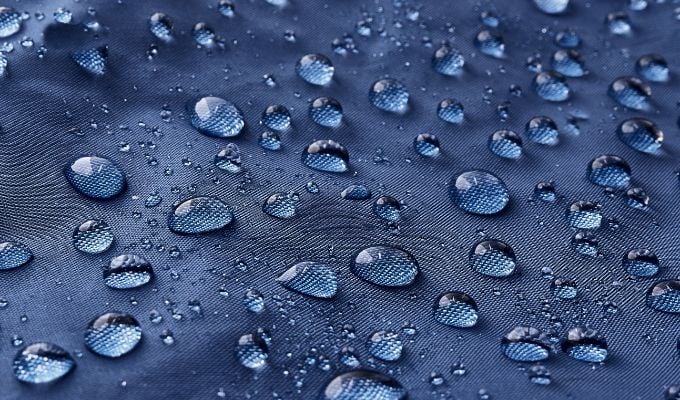
Clothing can be a surprising source of PFAS exposure, but these chemicals are exactly what makes some textiles waterproof and stain-resistant. PFAS have been used in water-repellent clothing, stain-resistant fabrics, and outdoor gear.
The good news is that PFAS-free methods for making fabrics water-resistant do exist. Research has found that some non-fluorinated treatments can provide effective water repellency, so you don’t necessarily have to give up performance to avoid PFAS. When shopping for clothing, especially rainwear and outdoor gear, look for brands that specifically state that their products are PFAS-free or made with fluorine-free water-repellent treatments.
For everyday clothing, choosing natural fibers like cotton, linen, hemp, or wool—especially when they aren’t treated with water- or stain-resistant finishes—is another simple approach.
I share some of my favorite natural fiber clothing in my guide to affordable sustainable clothing brands.
7. Skip Stain-Resistant Treatments When You Can
Stain-resistant treatments for carpets, upholstery, and fabrics are another potential source of PFAS in the home. PFAS have been used to make these materials resistant to stains, grease, and water, and ATSDR lists stain-resistant carpets, upholstery, and other fabrics as potential sources of PFAS exposure.
When you’re buying new carpet, furniture, rugs, or other fabric items, consider skipping optional stain-resistant treatments unless you really need them. And be especially cautious about after-market stain-protection sprays and treatments—there’s often no reason to add another chemical treatment to something that doesn’t need it.
Of course, I’m not suggesting you replace your existing sofa or rip out your carpet just because it might have a stain-resistant treatment. When you do need to replace something, simply look for products that are made without PFAS and skip the extra stain-resistant treatment. It’s another one of those small choices that can help reduce unnecessary PFAS in your home.
8. Choose PFAS-Free Personal Care Products
Another surprising source of PFAS could be the products you use in your daily personal care routine, like dental floss, period underwear, adhesive bandages, and even some shampoos. PFAS have been detected in a variety of personal care and consumer products, particularly products designed to be waterproof, water-resistant, or long-lasting.
When you’re shopping for personal care products, look for brands that specifically state that their products are PFAS-free. Don’t assume that a product is PFAS-free simply because it’s marketed as “natural” or “clean”—those terms don’t tell you whether PFAS are present.
You don’t need to replace everything in your bathroom at once. Instead, pay attention when you’re buying something new or replacing a product you already use, and choose a PFAS-free option when one is available. Small swaps like these can add up without making your personal care routine complicated.
9. Check Makeup for PFAS-Related Ingredients
Check your makeup bag too, because PFAS chemicals have been used in some long-lasting and water-resistant products like mascara, lipstick, foundation, and nail polish. The FDA has identified PFAS being intentionally added to some cosmetics to help with things like water resistance, smooth texture, and film formation.
If you’re trying to avoid PFAS, check the ingredient list for names such as PTFE, perfluorononyl dimethicone, and other ingredients containing “fluoro” or “perfluoro.” Products marketed as waterproof or long-lasting may be worth a closer look, too. Keep in mind that not every product in these categories contains PFAS, and the absence of an obvious PFAS-related ingredient doesn’t necessarily guarantee that a product is completely free of PFAS.
When you’re ready to replace something in your makeup bag, look for brands that specifically disclose that their products are PFAS-free. I’ve put together a list of sustainable makeup brands that can give you some good places to start.
10. Vacuum and Dust Frequently
Yes, we’re telling you to clean again! That’s because the ATSDR has recognized accidentally swallowing contaminated dust or residue as a potential route of PFAS exposure. Consumer products such as stain-resistant carpets, upholstery, and water-repellent clothing can contribute PFAS to household dust and residue.
The good news is that this doesn’t require anything fancy. Regularly vacuuming carpets and rugs and dusting surfaces can help reduce the amount of household dust you’re exposed to. If you have hard floors, wet mopping can also help remove dust and residue rather than simply moving it around.
This is especially worth paying attention to if you have young children, since they tend to spend more time close to the floor and frequently put their hands and objects in their mouths. And if you’re already following the other steps in this list, don’t stress about making your home completely dust-free—regular cleaning is simply another practical way to reduce one potential source of PFAS exposure.
Which Changes Make the Biggest Difference?
If you’re feeling a little overwhelmed by all the possible sources of PFAS, don’t be. You don’t need to tackle everything at once. If you want to focus your energy on a few practical changes, I’d start with these:
- Check your drinking water and consider filtration if PFAS are a concern.
- Reduce your use of grease-resistant food packaging, especially when you have easy alternatives.
- Choose PFAS-free cookware and cooking appliances when you’re replacing older nonstick items.
- Skip unnecessary stain- and water-resistant treatments for clothing, carpets, furniture, and other household items.
- Look for PFAS-free products when practical, including personal care products and cosmetics.
And remember our motto, progress—not perfection. You can’t completely eliminate your exposure to PFAS, but making a few thoughtful changes can help reduce the sources you have the most control over.

Frequently Asked Questions About PFAS
Should I be worried about PFAS?
There’s good reason to reduce unnecessary PFAS exposure, but there’s no need to panic. Research has linked exposure to certain PFAS with health effects including increased cholesterol, lower antibody response to some vaccines, effects on pregnancy, and certain cancers. The risks vary depending on the specific PFAS and level of exposure, so focus on practical ways to reduce exposure rather than trying to eliminate every possible source.
What products contain PFAS?
PFAS may be found in some nonstick cookware and bakeware, grease-resistant food packaging, water- and stain-resistant clothing, carpets and upholstery, cosmetics, personal care products, and small appliances with nonstick coatings. Not every product in these categories contains PFAS, so look for specific PFAS-free and PTFE-free claims when shopping.
Is nonstick cookware a source of PFAS?
Some nonstick cookware uses PTFE, a type of PFAS, as its coating. If you want to avoid PFAS-based coatings, look for cookware specifically labeled PFAS-free and PTFE-free, or choose materials such as stainless steel, cast iron, or carbon steel.
Is ceramic cookware PFAS-free?
Not necessarily. Many ceramic nonstick coatings are made without PFAS, but the word “ceramic” alone doesn’t guarantee that a product is PFAS-free. Look for a specific manufacturer claim that the cookware is PFAS-free and PTFE-free.
Does a water filter remove PFAS?
Some do, but not all. Activated carbon and reverse osmosis systems can reduce certain PFAS, but effectiveness varies by filter and by the specific PFAS. Look for independent certification or testing that specifically addresses PFAS before buying a filter. See my guide to how to choose a tap water filter.
Are PFAS in cosmetics?
Yes. Some cosmetics contain PFAS or PFAS-related ingredients, which may be used to make products more water-resistant or long-lasting. Check ingredient lists for names such as PTFE and ingredients containing “fluoro” or “perfluoro,” and look for brands that specifically state their products are PFAS-free.
What are some things you do to avoid PFAS chemicals?