

Non-Toxic Cookware: What’s Safe, What to Avoid & How to Choose
Choosing non-toxic cookware can feel overwhelming, especially with so many confusing claims and materials to sort through. This guide breaks down the safest cookware options, what to avoid, and how to choose the best non-toxic cookware for your kitchen.
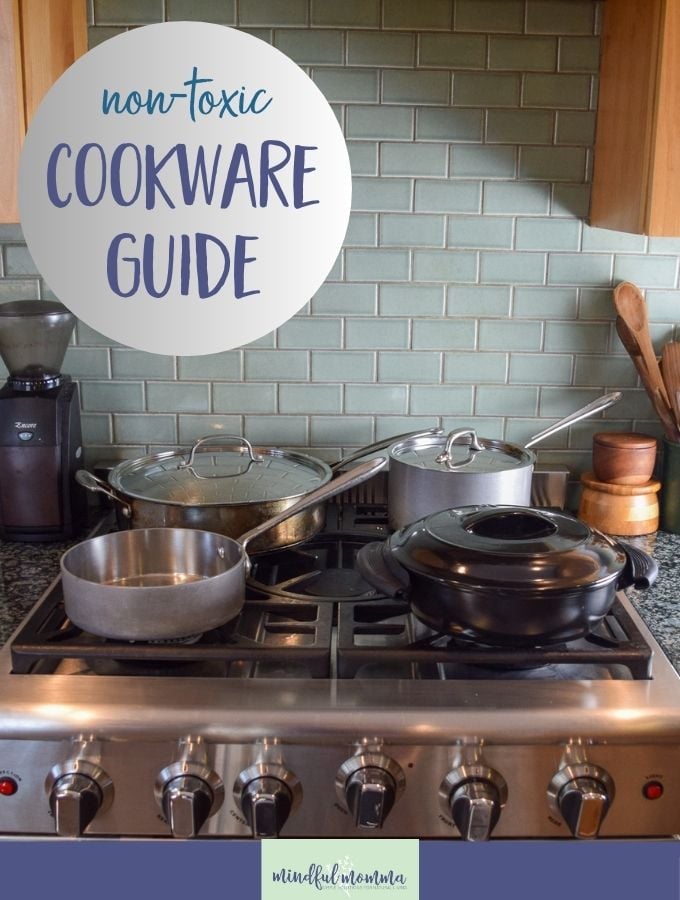
Cooking at home is one of the best things you can do for your health—but the cookware you use matters too. Many conventional pots and pans are made with coatings or materials that can release unwanted chemicals, especially when overheated or worn down.
That’s where non-toxic cookware comes in. 🍳 In this guide, we’ll break down what that really means, which cookware materials are safest, and what to avoid. You’ll also find practical tips for choosing the right cookware for your kitchen, along with links to our favorite cookware brands, sets, and in-depth reviews.
If you want a deeper dive into specific companies, see my guide to the best non-toxic cookware brands.
At Mindful Momma we only endorse products we’ve personally researched, tested, and honestly love. We may receive commissions from affiliate links in this article including Amazon Affiliates. Full Disclosure
Why Trust Mindful Momma?
You might be wondering — why trust me to recommend cookware?
I’ve spent 5+ years working in kitchenware stores, including Crate & Barrel, learning firsthand what makes cookware high-quality — and what doesn’t. I’ve also been researching non-toxic products for over 20 years and wrote a book on safe, healthy living.
My husband and I love to cook, and we’ve put dozens of cookware brands and types to the test in our kitchen — sautéing, roasting, searing, and scrubbing them to see what holds up. We may have gone a little overboard, but that hands-on experience helps me make recommendations that are practical, safe, and built to last. 😆

What Does “Non-Toxic Cookware” Really Mean?
Choosing non-toxic cookware can feel confusing – I get it. Marketing terms like “ceramic,” “eco-friendly,” and “nonstick” don’t always tell you whether a pan is actually a good choice.
In reality, cookware safety usually comes down to the materials used, any coatings or additives, and whether they can release potentially harmful substances when heated or damaged. When people talk about “non-toxic cookware,” they’re generally looking for cookware that avoids certain chemicals or heavy metals that may pose health or environmental concerns.
Here are some of the substances and materials many people prefer to limit:
PFAS / PTFE
Traditional nonstick pans commonly use coatings made with polytetrafluoroethylene (PTFE), a fluoropolymer in the broader PFAS family. PFAS is a large class of chemicals often called “forever chemicals” because many are highly persistent in the environment.
PTFE coatings are designed to be stable during normal use, but they can begin to break down at very high temperatures and may release fumes when significantly overheated. Because some PFAS chemicals persist in the environment and can accumulate in the body, many consumers prefer cookware labeled PFAS-free.
If avoiding PFAS is a priority for you, look for a clear PFAS-free claim from the manufacturer rather than assuming that terms like “nonstick” or “ceramic” mean the same thing.
If you’re looking beyond cookware for ways to limit these chemicals in everyday life, check out my guide to how to reduce your exposure to PFAS.
Lead, Cadmium & Other Heavy Metals
Lead and cadmium are toxic heavy metals that have historically been found in some cookware glazes, decorative coatings, and low-quality ceramic or aluminum pans. Properly manufactured cookware should meet applicable safety limits for these substances, and reputable brands may test their products to verify this.
Some ceramic or enameled cookware uses glazes that contain trace metals. When a glaze is properly manufactured and fired, these substances are generally intended to remain bound within the coating rather than leach into food. However, manufacturing quality, damage, and wear can affect the potential for contaminants to migrate from a food-contact surface.
For this reason, safety-focused shoppers may want to look for brands that provide independent or third-party testing for lead, cadmium, and other heavy metals, particularly for ceramic, enameled, or coated cookware.
Why “FDA-Approved” Doesn’t Mean “Non-Toxic”
Many cookware materials are permitted for food contact by the FDA, but that doesn’t necessarily mean they are completely free of substances that some consumers prefer to avoid.
FDA regulations generally address whether a substance can be safely used under specified conditions of use. They don’t mean that a cookware product contains zero potentially concerning substances or that it meets every shopper’s definition of “non-toxic.”
For example, some traditional nonstick coatings are legally permitted for food contact even though many consumers prefer to avoid PFAS chemicals. Because of this, people looking for safer cookware often look beyond basic regulatory compliance and consider the underlying materials, coatings, durability, and available testing information.
Marketing Terms That Don’t Guarantee Safety
Cookware packaging often includes appealing terms like “eco-friendly,” “green,” “PFOA-free,” or “ceramic.” While these claims can sound reassuring, they don’t necessarily tell you what the cookware is actually made of.
For example, “ceramic cookware” may refer to 100% ceramic cookware or to metal pans coated with a ceramic-based nonstick layer. These are very different types of cookware, with different performance, durability, and care requirements.
It’s also important to understand that PFOA-free does not necessarily mean PFAS-free. PFOA is one specific type of PFAS, while PFAS refers to a much larger class of chemicals. PTFE, commonly used in traditional nonstick coatings, is a fluoropolymer within that broader PFAS family.
What Should You Look For?
Rather than relying on a single “non-toxic” or “eco-friendly” label, I recommend looking at the actual materials used, the type of coating (if any), available testing information, and how the cookware is designed to perform and hold up over time.
For me, the goal isn’t to find cookware that has some perfect “non-toxic” label. It’s to choose durable cookware made with materials I feel comfortable using, from companies that are transparent about what goes into their products and how they test them.
Understanding Cookware Materials
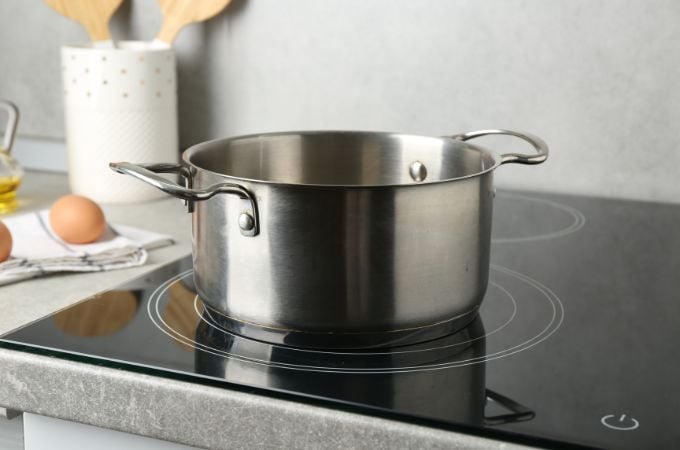
Different cookware materials have different advantages, limitations and care requirements. Rather than choosing based on a “non-toxic” label alone, consider the cooking surface, any coatings, the manufacturer’s material disclosures, and how you plan to use the pan.
- Stainless steel: Durable and versatile, with no synthetic nonstick coating on the cooking surface.
- Cast iron: Long-lasting and well suited to high-heat cooking; it requires seasoning and can be heavy.
- Carbon steel: Similar to cast iron but generally lighter, with a seasoned cooking surface that improves with use.
- 100% ceramic: Made from fired ceramic rather than metal with a ceramic-based nonstick coating. Because formulations and manufacturing can vary, check the manufacturer’s information about food-contact safety and heavy-metal testing.
- Ceramic-coated cookware: Usually made without PFAS, but coating durability varies. Look for a specific manufacturer claim rather than relying on the word “ceramic.”
- PTFE-coated nonstick: Offers convenient food release, but PTFE is a fluoropolymer within the broader PFAS family and requires attention to the manufacturer’s temperature and care instructions. (Not recommended by Mindful Momma)
There isn’t one ideal material for every kitchen. For a deeper dive into each material’s pros, cons, and safety details, see our full guide: Safest Materials for Cookware.
Cookware Materials I Prefer to Avoid
- Traditional PTFE nonstick — if your goal is to avoid PFAS.
- Damaged or deteriorating nonstick coatings — regardless of coating type.
- Cookware with unclear materials or coatings — especially when the manufacturer won’t disclose what is used.
- Poor-quality ceramic or enameled cookware without adequate safety information — particularly when lead/cadmium testing information isn’t available.
This doesn’t mean every product in these categories is inherently dangerous. My concern is more about avoiding unnecessary uncertainty and choosing cookware from manufacturers that are transparent about materials, coatings, and testing.
How I Choose Non-Toxic Cookware
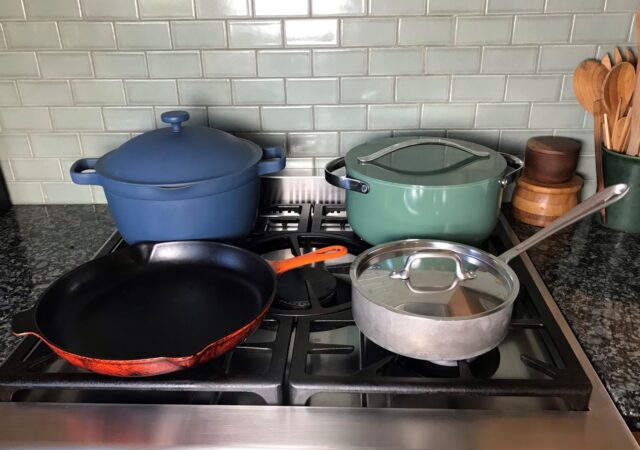
When I evaluate cookware, I look beyond a brand’s marketing claims. I want to understand what touches the food, how the pan is made, how it performs in a real kitchen, and whether it’s likely to last.
Choosing non-toxic cookware isn’t just about avoiding chemicals — it’s also about matching the material and design to your cooking style, heat levels, and family needs.
1. Start With the Cooking Surface and Materials
Look for a clear description of the cooking surface and any underlying coatings. Stainless steel, cast iron and carbon steel offer alternatives to synthetic nonstick coatings, while ceramic-coated cookware may appeal to people who prefer a nonstick surface without intentionally added PFAS.
2. Check the Manufacturer’s Claims
Terms like “non-toxic,” “eco-friendly” and “PFOA-free” don’t tell the whole story. If avoiding PFAS is a priority, look for an explicit PFAS-free claim and ask what it covers. Check whether the manufacturer provides supporting testing or documentation.
3. Look for Relevant Safety Testing
When safety claims are important, I look for credible testing that actually relates to the materials and coatings used in the finished cookware. I’ll explain what to look for in more detail below.
4. Consider Durability and Everyday Performance
A good cooking pan should work well and hold up over time. Factors I consider include heat distribution, food release, ease of cleaning (dishwasher safe or hand-wash?), resistance to wear (are the handles attached solidly?), and how much maintenance a material requires. Keep in mind that a coating that wears out quickly may be less practical than a durable pan that can be used for many years.
5. Match the Cookware to Your Cooking Style
The types of foods you cook will dictate the type of cookware you need. Stainless steel is versatile for everyday cooking and high-heat sautéing; cast iron is great for searing, roasting, and dishes that benefit from steady heat; and carbon steel works well for searing and stir-frying. Nonstick cookware can be convenient for eggs and delicate foods, but won’t hold up under high heat cooking. You don’t have to use one material for everything – in fact, I own many different pans for my different cooking needs.
6. Balance Price, Performance and Longevity
Expensive cookware isn’t automatically safer. I consider the materials, construction, performance, warranty and expected lifespan alongside the price. The goal is to find cookware that fits your needs and budget—not to buy the most expensive option.
Pair your cookware with one of these safest cutting boards to reduce exposure to unnecessary plastics in the kitchen.
Cookware Safety Testing: What to Look For
Even when a cookware brand claims to be “non-toxic,” it can be difficult to know what that really means. Understanding testing, regulations, and safety claims can help you make informed choices and separate useful information from marketing.
What Does PFAS-Free Testing Actually Tell You?
PFAS (per- and polyfluoroalkyl substances) are a large class of chemicals that includes substances used in some traditional nonstick coatings. Many brands now advertise “PFAS-free” cookware, but there isn’t one universal federal certification that verifies every PFAS-free claim.
A PFAS-free claim may be based on a manufacturer’s specifications, supplier information, or laboratory testing. If avoiding PFAS is important to you, look for brands that:
- Clearly state that the finished cookware is PFAS-free, rather than simply saying it is PFOA-free.
- Specify whether the claim is based on third-party laboratory testing.
- Provide testing information or documentation when available.
- Clearly identify the materials and coatings used in the cookware.
Keep in mind that a PFAS test tells you about the substances and detection limits covered by that particular test. It doesn’t automatically tell you everything about the safety or performance of the cookware.
Lead and Cadmium Testing
Lead and cadmium are toxic heavy metals that may be a concern with certain glazes, coatings, or other food-contact materials. Reputable cookware manufacturers should ensure their products comply with applicable limits for these substances.
When available, independent laboratory testing for lead and cadmium can provide useful additional information—especially for ceramic, enameled, or coated cookware.
As with PFAS testing, it’s worth looking at what was actually tested rather than simply looking for a “tested” or “certified” label. Ideally, a brand should be able to identify the product tested, the substances tested for, and the applicable testing standard or method.
Third-Party Testing vs. Manufacturer Claims
Brands may make safety claims based on their own specifications, supplier information, or internal testing. That doesn’t necessarily mean the claim is inaccurate, but independent testing provides another layer of verification.
When evaluating a cookware brand, I give more weight to companies that are transparent about:
- Who performed the testing
- Which product or material was tested
- What substances were tested for
- Which testing method or standard was used
- Whether the results apply to the finished cookware or only to individual materials
You’ll sometimes see names such as NSF, TÜV, SGS, or other independent testing organizations mentioned by cookware brands. These organizations perform different types of testing and certification, so don’t assume that the presence of one of these names means the cookware has been certified as “non-toxic” overall.
If a brand publishes actual test reports or detailed testing documentation, that’s generally more useful than simply displaying a certification logo.
What If a Brand Doesn’t Publish Test Results?
Not every cookware company publishes laboratory reports, and the absence of publicly available test results doesn’t automatically mean a product is unsafe. You can still evaluate a brand by looking at:
- Material transparency – Does the company clearly state what metals, coatings, and other materials are used?
- Coating information – If the cookware is coated, does the brand clearly identify the type of coating and whether it contains PFAS?
- Testing information – Does the company explain what it tests for, even if it doesn’t publish the complete reports?
- Heat and care instructions – Does the manufacturer provide clear guidance for safe temperatures and proper use?
- Track record and transparency – Is the company willing to answer questions about materials, testing, and manufacturing?
I don’t automatically rule out a cookware brand simply because I can’t find a complete laboratory report. But the more specific and transparent a company is about its materials and testing, the more confidence I have in its safety claims.
When in doubt, I generally favor cookware made from well-established materials with minimal coatings, such as stainless steel, cast iron, carbon steel, or fully ceramic cookware, and I pay close attention to how the manufacturer describes and tests the finished product.
What About California Proposition 65?
California’s Proposition 65 requires businesses to provide warnings when products expose consumers to chemicals that California has determined may cause cancer, birth defects, or other reproductive harm. A Prop 65 warning does not automatically mean that a cookware product is unsafe, nor does the absence of a warning guarantee that a product is completely free of potentially concerning substances.
Prop 65 warnings can apply to very low levels of certain chemicals, and the warning requirements are specific to California. If you see a Prop 65 warning on cookware, I recommend treating it as a reason to look more closely at the materials and available testing, rather than as a definitive judgment about the product’s overall safety.
California Proposition 65 information
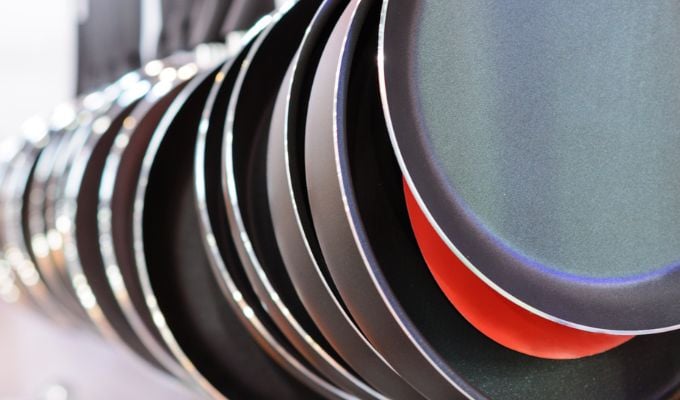
Nonstick Cookware: Safety, Materials & Best Practices
Nonstick cookware is super convenient, but its safety, durability, and performance depend on the type of coating, how it’s used, and how well it holds up over time. 🍳
Traditional PTFE-based (often called Teflon) and ceramic-coated cookware are the two main types you’ll encounter. They have different materials, performance characteristics, and care requirements, so knowing the difference can help you decide when nonstick makes sense—and when another material might be better.
Knowing the differences can help you decide when nonstick makes sense—and when another cookware material might be a better choice.
Types of Nonstick Cookware
Traditional PTFE (Teflon)
PTFE-coated pans are popular because they’re naturally nonstick and work especially well for eggs, pancakes, and other delicate foods. PTFE is a fluoropolymer within the broader PFAS family.
PTFE coatings are designed to be stable during normal use, but severe overheating can cause the coating to break down and release fumes. If you use PTFE cookware, avoid high heat, don’t leave an empty pan heating on the stove, and follow the manufacturer’s temperature and care instructions.
If you prefer to avoid PFAS, look for cookware that is specifically labeled PFAS-free rather than simply PFOA-free.
Ceramic-coated
Ceramic-coated cookware typically consists of a metal pan with a ceramic-based nonstick coating. Many brands make these coatings without PFAS, but don’t assume that every pan labeled “ceramic” is PFAS-free. Check the manufacturer’s specific claim and, when available, look for information about testing.
Ceramic coatings can also lose their nonstick performance over time, particularly when exposed to high heat, abrasive cleaning, or metal utensils. Follow the manufacturer’s care instructions to help extend the life of the coating.
How to Use Nonstick Cookware Safely
A few simple habits can help protect the coating and reduce the chance of overheating:
- Follow the manufacturer’s temperature guidelines. There isn’t one universal “safe” temperature for every nonstick coating.
- Avoid severely overheating an empty pan. If you’re preheating, keep the heat moderate and follow the manufacturer’s instructions.
- Use the recommended utensils. If the manufacturer recommends wood, silicone, or other non-metal utensils, follow those guidelines.
- Don’t use damaged cookware. If a coating is significantly scratched, peeling, flaking, or otherwise deteriorating, it’s time to replace the pan.
- Clean gently. Avoid abrasive cleaners or scouring pads unless the manufacturer specifically says they’re safe.
- Follow the care instructions. Dishwasher use, cooking temperatures, utensils, and other recommendations vary by coating.
These steps aren’t just about safety—they can also help your nonstick cookware perform better and last longer.
When Does Nonstick Make Sense?
Nonstick cookware can be a useful part of a kitchen, especially for:
- Eggs, pancakes, crepes, and other delicate foods that tend to stick
- Low-oil cooking when you want to use less fat
- Quick weekday meals where easy cleanup matters
- Foods that don’t require high heat, such as gentle sautéing
You don’t have to choose one type of cookware for everything. I actually prefer having a mix of materials in the kitchen—for example, stainless steel for searing and everyday cooking, cast iron or carbon steel for high-heat cooking, and nonstick for delicate foods.
If you’re trying to minimize PFAS exposure, you can also choose PFAS-free ceramic-coated cookware or other naturally nonstick materials instead of traditional PTFE.
Common Questions About Nonstick Cookware
Is ceramic non-stick cookware safe?
Ceramic non-stick cookware is generally made by applying a ceramic-based coating to a metal pan. Many manufacturers make these coatings without intentionally added PFAS, but the word “ceramic” alone doesn’t guarantee that a pan is PFAS-free or tell you everything about the materials used.
If you want to avoid PFAS, look for a specific manufacturer claim that the finished cookware is PFAS-free and, ideally, supporting testing or documentation. It’s also worth considering the durability of the coating, since ceramic non-stick cookware can lose its nonstick performance over time with high heat, abrasive cleaning, or heavy use.
If you’re looking for cookware made entirely from ceramic rather than ceramic-coated nonstick, see my guide to the safest materials for cookware.
Can I use nonstick cookware at high heat?
Nonstick cookware generally isn’t the best choice for high-heat cooking. Temperature limits vary by coating and manufacturer, so follow the specific instructions for your pan rather than relying on a universal temperature cutoff. For very high-heat cooking, I prefer stainless steel, cast iron, or carbon steel.
Find the Best Non-Toxic Cookware for Your Kitchen
We all have different needs for cookware, whether you’re making everyday meals, searing at high heat, or cooking family-sized recipes. Rather than trying to cover every type of cookware in one article, I’ve created focused guides to help you find the options that make the most sense for your kitchen.
Need Help Choosing Cookware Materials?
Start with the main guide you’re reading now, then visit Safest Cookware Materials for a deeper comparison of stainless steel, cast iron, carbon steel, ceramic, and other cookware materials—including their benefits, drawbacks, and what to consider when choosing between them.
Want to Compare Cookware Brands?
Read Best Non-Toxic Cookware Brands for brand-by-brand comparisons across stainless steel, cast iron, ceramic, and other cookware materials. I look at materials, performance, transparency, durability, and value to help you narrow down your choices.
Ready to Buy a Complete Set?
See Best Non-Toxic Cookware Sets for product comparisons, individual set reviews, pros and cons, and buying considerations. It’s a good place to start if you want to outfit your kitchen with a coordinated set rather than choosing individual pieces.
Want an In-Depth Cookware Review?
For a closer look at specific cookware brands and materials, check out my in-depth reviews based on hands-on experience and research:
Xtrema Ceramic Cookware Review – An in-depth look at 100% ceramic cookware, including the pros, cons, and who it’s best for.
360 Cookware Review – A detailed look at 360’s stainless steel cookware, including performance, durability, and whether it’s worth the investment.
Quick Tip: By navigating through these guides, you can mix and match cookware materials and brands to build a kitchen that fits your cooking style, heat preferences, and family needs — all while staying non-toxic.
My Recommended Non-Toxic Cookware
After years of researching cookware and testing different materials in our own kitchen, these are some of my top picks. Each one offers something different, so there isn’t one type of cookware that’s best for everyone.
I look for cookware made with materials I feel comfortable using, along with good performance, durability, and transparency from the manufacturer.

Best Stainless Steel Cookware: 360 Cookware
360 Cookware is my top pick for stainless steel cookware. Its fully clad, multi-layered construction provides even heating without a synthetic nonstick coating, making it a durable choice for everyday cooking, sautéing, and searing.
I’ve used 360 Cookware in my own kitchen and appreciate its solid construction and ability to handle the kind of everyday cooking that puts cookware to the test.
👉 See my full 360 Cookware review for a closer look at performance, durability, and whether it’s worth the investment.
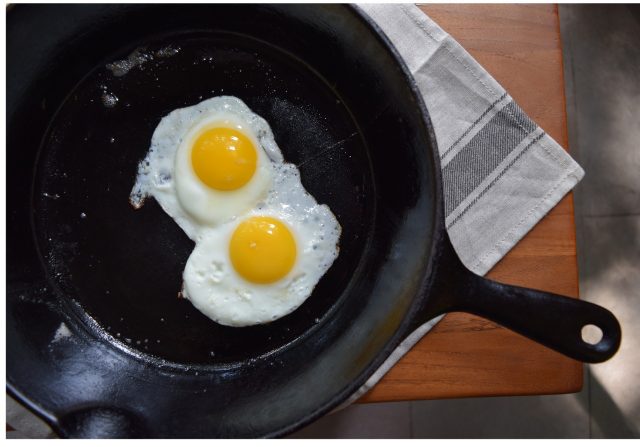
Best Cast Iron Cookware: Lodge
Lodge Cast Iron is a classic for good reason. Its pre-seasoned cast iron cookware doesn’t rely on a synthetic nonstick coating and can handle high heat, stovetop cooking, and oven use.
Cast iron is heavy and takes a little more care than stainless steel, but it’s incredibly durable and can last for generations. Lodge is a great choice if you want versatile, long-lasting cookware without a synthetic nonstick coating.
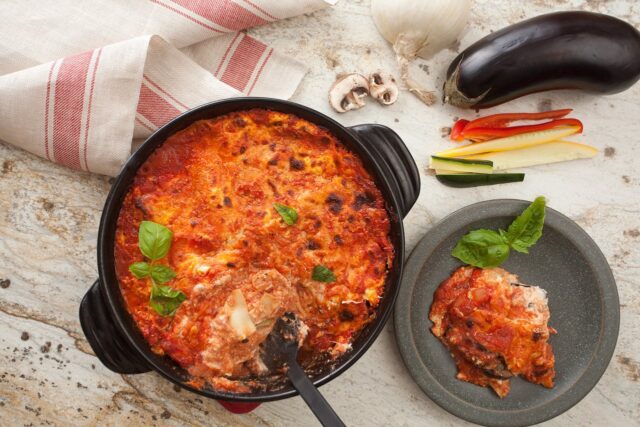
Best 100% Ceramic Cookware: Xtrema
Xtrema makes 100% ceramic cookware, meaning the cookware is made from ceramic rather than a metal core covered with a ceramic-based nonstick coating. As with any cookware, I recommend looking for clear information from the manufacturer about food-contact safety and heavy-metal testing.
👉 Read my Xtrema cookware review for a deeper look at the cookware, including its pros, cons, and who I think it’s best for.
Best Ceramic Nonstick Cookware: Caraway
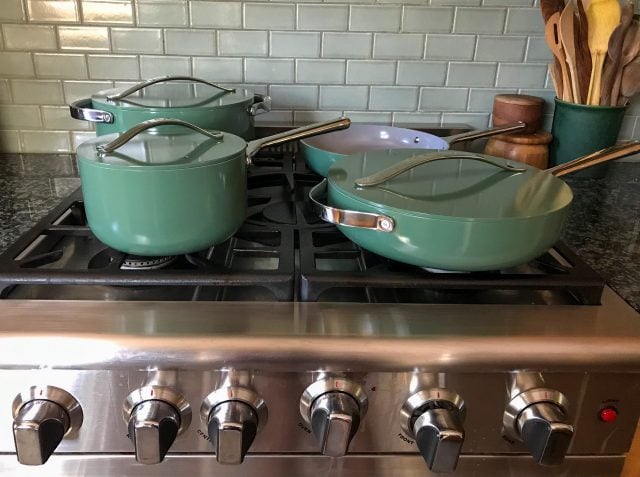
Caraway is a strong option if you want the convenience of ceramic-coated nonstick cookware without traditional PTFE-based nonstick.
Caraway uses a ceramic-based coating and states that its cookware is made without PFAS. The brand has also published information about independent testing of its cookware. I like Caraway for cooks who want easy food release and cleanup along with a more attractive, modern design.
As with any coated cookware, keep in mind that the nonstick surface won’t last forever. Following the manufacturer’s care and temperature recommendations can help extend its useful life.
Which Type Is Right for You?
These four options represent very different approaches to cookware:
- 360 Cookware → Best for durable, versatile stainless steel
- Lodge → Best for high-heat cooking and traditional cast iron
- Xtrema → Best if you specifically want 100% ceramic cookware
- Caraway → Best if you want PFAS-free ceramic nonstick convenience
You don’t have to choose just one. I prefer having different types of cookware in my kitchen for different jobs—and choosing based on how you actually cook rather than trying to find one “perfect” pan.
For more options, see my guides to Best Non-Toxic Cookware Brands and Best Non-Toxic Cookware Sets.
How to Care for Non-Toxic Cookware So It Lasts
Taking proper care of your cookware helps it last longer, perform better, and stay safe to use. Different materials require slightly different care, but a few simple habits can make a big difference.
Cleaning Methods That Don’t Damage Coatings
- Avoid harsh scouring pads on ceramic-coated or nonstick pans
- Use warm water, mild soap, and a soft sponge for everyday cleaning
- Let pans cool before washing to prevent warping or damage
- For stuck-on food, soak instead of scrubbing aggressively
When to Replace Cookware
Even high-quality cookware doesn’t last forever. Consider replacing when:
- Nonstick or ceramic coatings are scratched, flaking, or worn down
- Pans heat unevenly or show signs of warping
- There are visible cracks or damage that could affect performance
Durable materials like stainless steel and cast iron can last for decades with proper care and you may not have to replace them in your lifetime.
Common Mistakes That Reduce Lifespan
- Overheating nonstick or ceramic-coated pans (been there, done that! ☹️)
- Using metal utensils on coated surfaces
- Skipping seasoning for cast iron or carbon steel
- Putting cookware in the dishwasher when it’s not recommended
Wondering what utensils to use with your cookware? Check out our cooking utensils guide!
How to Clean Stainless Steel Pans
Stainless steel is low-maintenance but can develop stuck-on residue. For best results:
- Use baking soda or a gentle scrub to remove stubborn spots
- Add a splash of vinegar to help break down discoloration
- Dry thoroughly to prevent water spots
How to Maintain Cast Iron
Cast iron requires a bit more care but rewards you with long-lasting performance:
- Keep it lightly seasoned with oil to maintain a natural nonstick surface
- Avoid soaking for long periods or using harsh soap
- Dry immediately and apply a thin layer of oil after cleaning (I heat mine on the stove for a minute or so to dry thoroughly.)
FAQs About Non-Toxic Cookware
What is the safest cookware material overall?
Stainless steel, cast iron, and carbon steel are among the best choices if you’re looking for cookware without synthetic nonstick coatings. They’re durable, can withstand high temperatures, and can last for many years with proper care. There isn’t one “safest” material for everyone, so I also consider performance, maintenance, potential metal sensitivities, and how the cookware is manufactured.
Is All-Clad non-toxic?
It depends on the specific cookware line. All-Clad makes stainless steel cookware without a PFAS-based nonstick coating, and it’s one of the types of cookware I recommend. Some of its nonstick lines use PTFE. If avoiding PFAS is a priority, check the specific product and coating rather than assuming all All-Clad cookware has the same materials.
Does stainless steel cookware contain nickel?
Yes, some types of stainless steel cookware contain nickel. Many common stainless steel grades, such as 18/8 and 18/10 stainless steel, contain nickel along with chromium, which helps make the cookware resistant to rust and corrosion.
Small amounts of nickel can migrate from stainless steel into food, particularly when cooking acidic foods for long periods of time. For most people, this isn’t considered a significant concern, but if you have a known nickel sensitivity or allergy, you may want to choose lower-nickel or nickel-free cookware such as cast iron, carbon steel, or certain grades of stainless steel.
What cookware is PFOA- and PTFE-free?
Cookware made from stainless steel, cast iron, carbon steel, and 100% ceramic does not require a PFAS-based nonstick coating. Many ceramic-coated nonstick pans are also made without intentionally added PFAS, but you’ll need to check the manufacturer’s materials and claims because not all products labeled “ceramic” are the same.
Which types of cookware are safe for induction cooking?
Induction cooktops require cookware with a magnetic base. Cast iron and carbon steel work well, as do many stainless steel pans. Some enameled cast iron also works. Other materials, such as aluminum, copper, glass, and 100% ceramic, generally won’t work unless the cookware has a magnetic layer or base designed for induction.
Have you made the switch to non-toxic cookware? I’d love to hear your thoughts!

Like baking too? We’ve got a roundup of the top non-toxic bakeware brands!


This is great info! Thanks for posting! I’ve just purchased a set from Green Pan and am hoping I made a good choice!! 😳. Does this brand fall into your “use with caution” category?
UPDATE: At this point I feel more comfortable recommending high quality ceramic cookware like the Always Pan because it has been third-party tested for heavy metals and other toxic chemicals. I would use caution with brands of ceramic cookware that are not transparent about testing.
Trying to purchase the always pan and the perfect pot. Already in love with the fact that’s it’s made PFOA PTFE & PFAS free!!
Anyhow tried using your discount code MINDMOM and it didn’t work.
Do you an updated code?
Please advise. Thank you
Margie
Sorry about the code – the company told me they stopped using ongoing discount codes – but be sure to check their website for current specials!
Thanks for the thorough round-up! Our Lodge cast-iron pan is definitely our favorite!
We love ours too!
Thank you for all the information! Have you happened to come across bakeware or cookware that is non toxic AND made in the US or Europe?
Thanks
Maja and Robert
American Kitchen stainless steel cookware is made in the US. https://americankitchencookware.com/stainless-steel-cookware Hope that helps!
would you say all clad stainless steel is safe for an everyday use? I am completely new to non toxic cookware… if I dare share my current cooking pans … lol
Oh yes – stainless steel pans are very safe to use and All Clad is a very reputable brand. I own quite a few stainless pans from All Clad and they have stood the test of time!!
Do you recommend Caraway brand asa safe option? Any cons?
Caraway seems to be pretty similar to the Always Pan. I’m hoping to do a review of it soon!
Is Sertodo copper third-party tested? Their stuff is gorgeous, but it says they use recycled metals (according to their website). How can we make sure there are no alloys in this recycled metal? :/ I have very sensitive kids and can’t find any info on their copper..
I don’t know the answer to that – but here is their contact info: Sertodo Copper (512) 572-0167 email: hello@sertodo.com
Hi Nancy ! Did you get an answer from them ?
As far as ceramic coated pans go, is Always Pan less toxic than Green Pan? I see in another comment you said to use with caution on Green Pan. I’m curious if Always Pan could also be potentially harmful. Thx!!
Hi Tessa – Good question! Since I first wrote this post I’ve learned a bit more about ceramic cookware. At this point I feel more comfortable recommending high quality ceramic cookware like the Always Pan because it has been third-party tested for heavy metals and other toxic chemicals. I would use caution with brands of ceramic cookware that are not transparent about testing. Hope that helps!
Have you done any research on Scanpans? I was planning to purchase those until more recently I’ve been finding info on the Caraway and Always pans.
I haven’t used Scanpan but it is ceramic non stick and I believe they have a good reputation for quality.
hi MICAELA hope you are doing well
there is know doubt that did a detail research on the topic. But, i have a doubt on copper cookware; yes they are very well conductor of heat, at the same time they are highly reactive with citrus foods.
So, will you really consider them as a non toxic cookware?
Good question Lila – the tin lining on copper pans eliminates the concern about reactivity with acidic foods.
Thanks for the reply… Late merry christmas & happy new year in advance…..
What would you recommend as the best pan/material when cooking with acidic foods like tomato sauce?
Thanks!
I would stick to stainless steel for that.
I love your blog! I’m a big fan of non-toxic cookware and I’m always on the lookout for new brands and types to try. Thank you for all the great information!
How safe is the aluminum core in The Always Pan or any other pan? Aluminum leakage is a big concern. Any input would be greatly appreciated.
Thank you.
I am not aware of any concern with aluminum leakage with The Always Pan
Out of these brands which pot would be good for cooking rice?
I personally use stainless steel pots for cooking rice.
What about staub?
I’ve never used Staub but my understanding is that is high quality enameled cast iron cookware.
HELP! I am searching for non toxic (non aluminum) disposable cookware that I can make ahead and freeze items in bulk. I can only seem to find aluminum. Any ideas?
I’m afraid that I don’t know of anything other than aluminum for disposable bakeware.
Hi, Any good rest for a non toxic air fryer?
Any good recs for a non toxic air fryer? ***Not rest
Sorry – I have not tested any air fryers yet.
Im surprised I dont see green pan on here. It is one of the best non toxic nonstick pans I have heard.
I do have a link to one Greenpan product in the post.
What about carbon steel?
I just recently added a carbon steel option to this post!
Hey there! Costco just had a beautiful enameled cast iron dutch oven set and I’m trying to figure out if it’s good quality. The brand is Tramontina. Would love any perspective you have please!!
I’m not familiar with that brand Tramontina – sorry!
Hi mindful momma Micaela,
Have you heard of Heritage Steel. They are supposed to be non toxic and made in the US. I’m so tempted to purchase this brand because their prices are a lot more affordable. Do you know if they are really non toxic?
Thank you
Mary
No I have not heard of that brand.
Out of all the pots and pans ive tried over the years my copper pans are my favorite. My copper pans always cook evenly and food never sticks!
glad to hear you love cooking with copper!