

Best Non-Toxic Food Storage Containers: Safe, Practical Picks for Your Kitchen
Looking for safer ways to store food in your kitchen? I’ve rounded up the best non-toxic food storage containers, including practical glass, stainless steel and silicone options to help you store leftovers, prep meals and keep food fresh without relying on plastic.
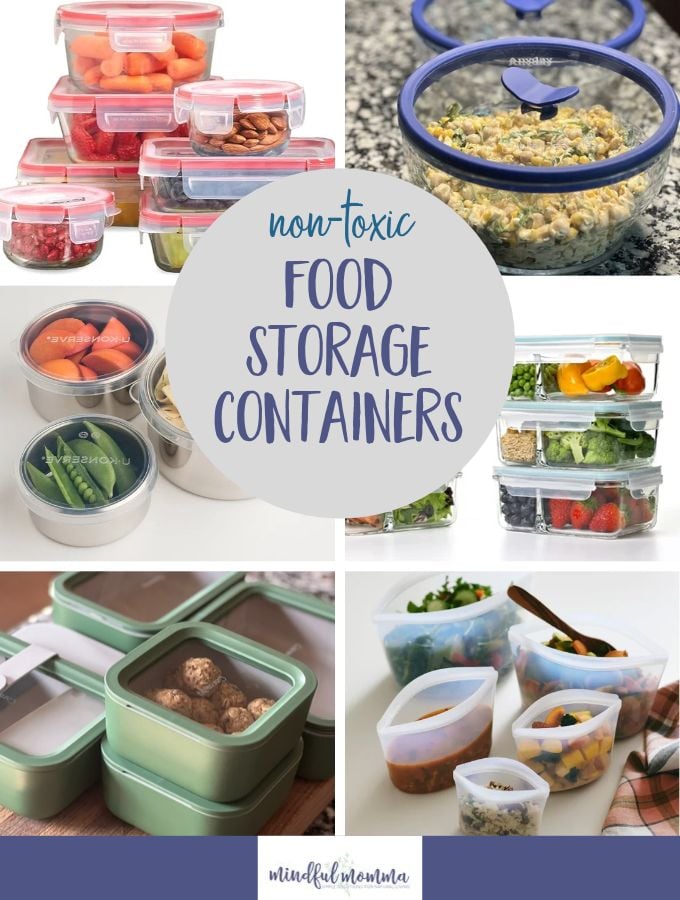
Like many people, my cupboards used to be filled with plastic containers waiting to be filled with leftovers and put into the fridge and (gasp!) even the microwave.
But after learning the potential concerns with plastic food storage, I slowly transitioned from plastic containers to non-toxic food storage containers made from safer materials like glass, stainless steel and silicone.
Depending on your needs, you’ll find that some food containers work better than others, so I’m sharing the best non-toxic food storage container types for different uses. These are my favorites, along with a few other options worth considering, based on my experience using and evaluating food storage containers over the years.
At Mindful Momma we only endorse products we’ve personally researched, tested, and honestly love. We may receive commissions from affiliate links in this article including Amazon Affiliates. Full Disclosure
What I Look for in Food Storage Containers
After plenty of trial and error, I’ve found that the best food storage containers are a combination of safe materials, durability, convenience and value. Here is what I look for in a non-toxic food storage container:
- Materials that minimize direct plastic contact with food
- Durable construction for everyday use
- Dishwasher-safe containers that are easy to clean
- See-through designs so you can identify leftovers at a glance
- Secure lids that are easy to remove and clean
- Stackable shapes and practical sizes
- Good value for the price
Learn more about how to reduce your exposure to microplastics.
Best Non-Toxic Food Storage Containers
Whether you prioritize a leakproof container, a see-through design or the most versatile food storage and heating options, there’s bound to be a good option for you in this list of non-toxic food storage containers.
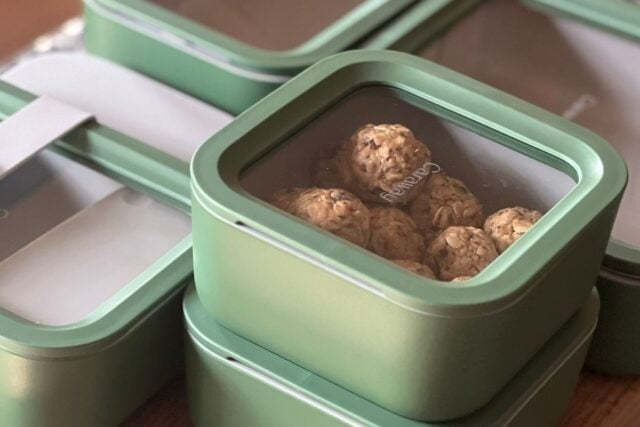
Best-Looking Food Storage Containers: Caraway Food Storage Containers
I have to admit that I’m a sucker for good functional design – and I’m willing to pay a bit more for something that works really well and looks gorgeous too.
Caraway food storage containers are beautifully designed, super practical to use and come in colors that can be coordinated with the rest of your kitchenware. The containers feature a borosilicate glass body with a non-toxic ceramic coating. The lids are glass with a silicone seal.
Why I like it: Caraway combines practical food storage with a polished aesthetic that feels a little more special than the usual storage containers. The full food storage set comes with storage organizers that help keep everything neatly organized in my cupboard.
Things to know: These containers are an investment, so they’re best for someone who values design as well as everyday functionality. Containers can be purchased in a set or individually.

Best Affordable Food Storage Containers: Pyrex Freshlock
If you’re looking for practical and AFFORDABLE, this set from Pyrex is here for you. The Freshlock line of food storage containers have sturdy, locking lids that are designed to create an airtight, leakproof seal. And the price won’t break the bank.
Why I like it: These containers are like your reliable friend who’s always there for you. When I look in my cupboard, there are always plenty of them in all shapes and sizes. (I stack the containers and store the lids on the side – but you do you!)
Things to know: The containers have plastic lids, so they’re not completely plastic-free. Pyrex also makes a line of glass containers with basic plastic lids so be sure you’re buying from the Freshlock line.
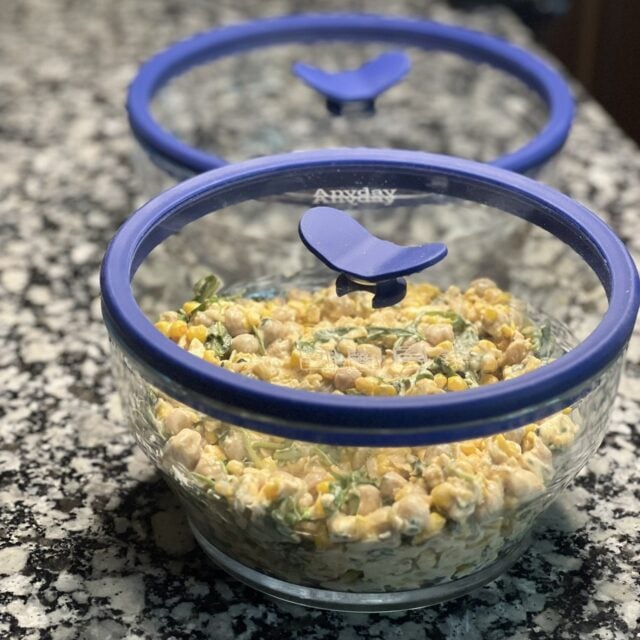
Most Versatile Glass Food Storage: Anyday Glass Dishes
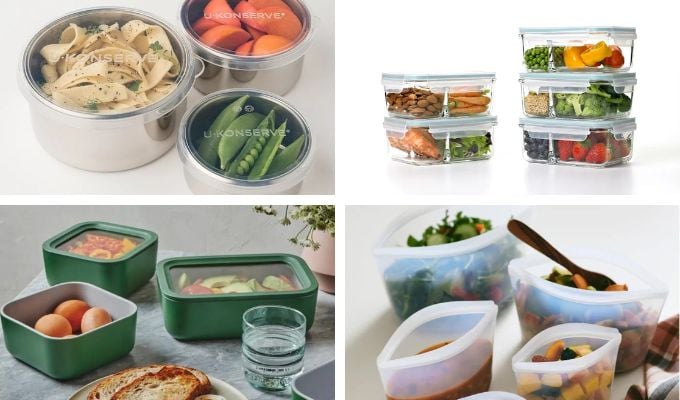
These glass containers from Anyday play double duty as both cookware and food storage. They have a patent-pending lid that is designed to trap steam during cooking and can be vented to release pressure.
Why I like it: I appreciate the versatility of these containers – they work great in the microwave as well as for storing food in the refrigerator and can even be used in the oven and freezer. They are also 100% plastic-free.
Things to know: Both the glass dishes and lids are oven-safe, although the lids have a lower temperature limit (400°F versus 500°F for the dishes). Anyday containers are available in round or square shapes and a variety of sizes (the sets are the best value.)
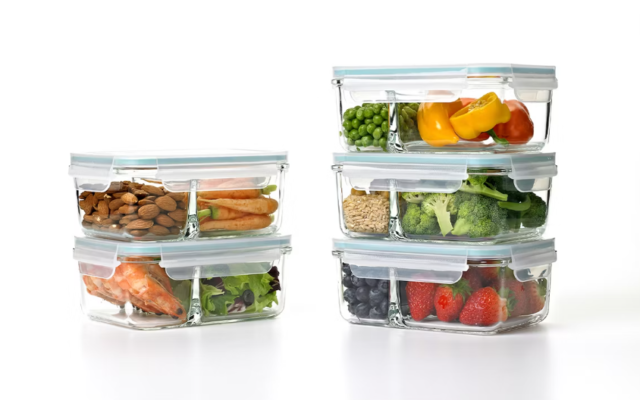
Best Divided Food Storage Containers: Glasslock Divided Glass Containers
If you like to meal prep or keep different foods separate, these tempered glass containers with divided compartments are worth a look. Bonus: they are microwave-safe and freezer-safe too.
Why I like it: I don’t actually own these but I think they would be super handy for meal prepping, lunch packing and anytime you have foods to store that you don’t want touching.
Things to know: The snap lids are made from BPA-free plastic.
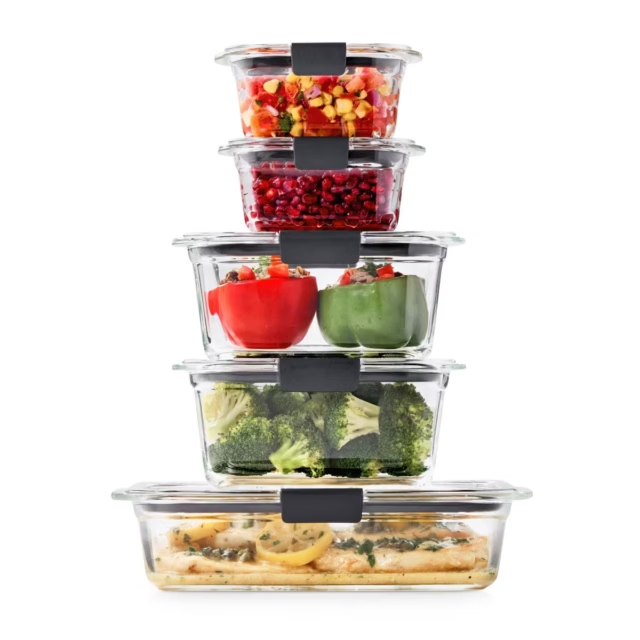
Best Leakproof Glass Food Storage: Rubbermaid Brilliance Glass Containers
If leakproof is your top priority, Rubbermaid Brilliance Glass is worth a look. These glass containers have BPA-free plastic lids with secure latches and a 100% airtight, leakproof seal.
Why I like it: If I had a container of soup sloshing around in my work bag, I’d want to be 100% sure the container was leakproof.
Things to know: Although the manufacturer says the lids are microwave-safe, I prefer to remove them when reheating food and use a silicone microwave cover instead.
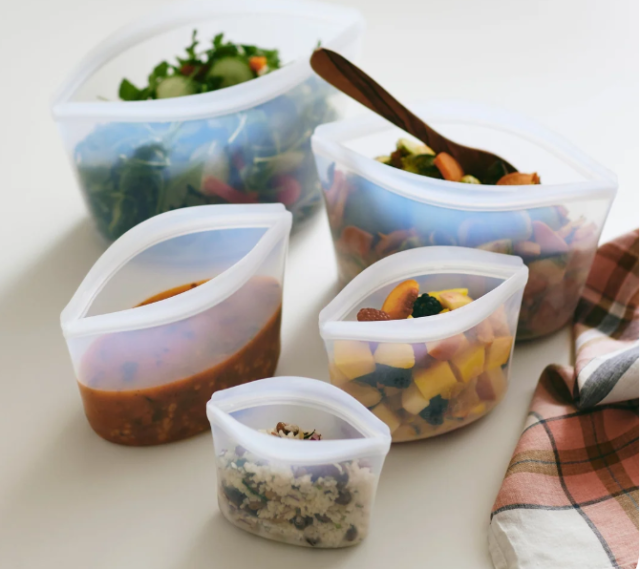
Best Reusable Food Storage Bags: Stasher Bags
A bag was never the first thing that came to mind when I thought about food storage, but these Stasher bags have changed me forever! Made from food-grade platinum silicone, Stasher bags are very durable, designed for repeated use and have a patented leak-free seal.
Why I like it: I appreciate that silicone bags take up less space than containers. They are perfect for storing cheese, cut fruit and vegetables and so many other foods. Their silicone bowls work for wet leftovers too.
Things to know: Many stores carry Stasher bags these days – they are easy to find!
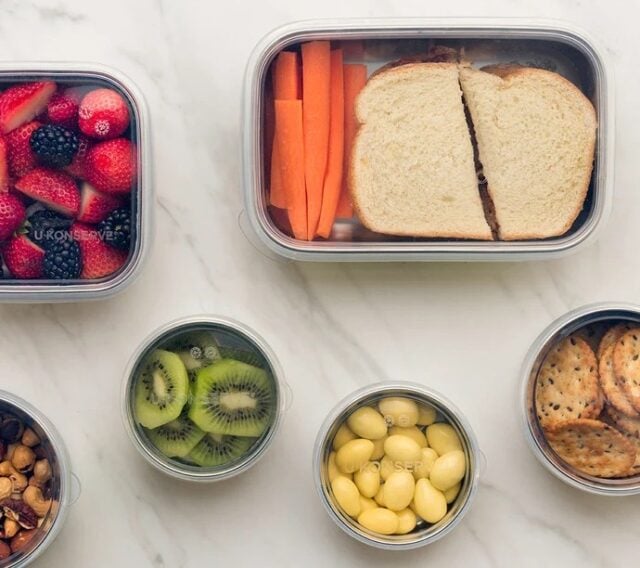
Best Stainless Steel Food Storage Containers: U-Konserve
Stainless steel has the advantage of being lighter than glass and less likely to break if dropped. U-Konserve makes durable containers from food-grade stainless steel and feature leakproof silicone lids.
Why I like it: The see-through lids are super helpful so you can see what’s in the container.
Things to know: Available in round or rectangular sizes
Here are even more plastic-free food storage ideas for your kitchen.
Compare the Best Food Storage Containers
Choosing the right food storage containers depends on how you plan to use them. Some are great for meal prep, others are ideal for reheating leftovers, and some are simply better at keeping food fresh without leaks. Here’s a quick comparison of my top picks to help you find the best fit for your kitchen.
| Brand | Material | Freezer-Safe | Microwave-Safe | Dishwasher-Safe | Leakproof | Oven-Safe |
|---|---|---|---|---|---|---|
| Caraway Food Storage | Ceramic-coated glass | Yes | Yes* | Yes* | No | Yes* |
| Pyrex Freshlock | Glass with plastic lids | Yes | Yes | Yes | Yes | Yes* |
| Anyday Glass Dishes | Glass with plastic-free lids | Yes | Yes | Yes | Yes | Yes |
| Glasslock Divided Containers | Tempered glass with BPA-free plastic lids | Yes | Yes* | Yes | Yes | No |
| Rubbermaid Brilliance Glass | Glass with BPA-free plastic lids | Yes | Yes | Yes | Yes | Yes* |
| Stasher Bags | Food-grade platinum silicone | Yes | Yes* | Yes | Yes | No |
| U-Konserve | Stainless steel with silicone and clear lids | Yes | No | Yes | Yes | No |
*Caraway, Pyrex Freshlock and Rubbermaid Brilliance: oven-safe without lids. Glasslock lids are not microwave-safe. Caraway lids should be hand-washed. Stasher bags are microwave-safe, but I don’t recommend using them in the microwave. Anyday glass dishes are oven-safe with the lid, following manufacturer instructions.
Which Food Storage Material Is Best?
When it comes to food storage, there’s no single material that’s best for everyone. While I prefer food storage containers made without plastic wherever practical, I also want them to be durable, easy to clean and practical for everyday use.
Glass, stainless steel and silicone are all good options, each with its own advantages and limitations. Here’s what to consider when choosing food storage containers for your kitchen.
Glass Food Storage Containers
Glass is one of my favorite materials for food storage because it’s easy to see what’s inside, doesn’t absorb food odors or stains easily, and works well for storing leftovers. Many glass containers can also be used for reheating food, and some are safe for the freezer and oven.
Benefits: See-through, generally nonporous, easy to clean and available in a wide range of shapes and sizes. Glass is also a good choice for storing acidic foods.
Things to consider: Glass is heavier than other materials and can break if dropped. Not all glass containers are suitable for the freezer, microwave or oven, so check the manufacturer’s instructions before using them.
Stainless Steel Food Storage Containers
Stainless steel is another durable option for food storage. It’s lightweight compared to glass, doesn’t break when dropped, and is a good choice for snacks, packed lunches and storing leftovers.
Benefits: Durable, lightweight, easy to clean and a good option for avoiding direct plastic contact with food. Stainless steel containers can last for many years with proper care.
Things to consider: Stainless steel is opaque, so you can’t see what’s inside, unless you have a transparent lid. It also isn’t microwave-safe, which means you’ll need to transfer food to another dish for reheating.
Silicone Food Storage Bags
Reusable silicone bags are a flexible alternative to traditional food storage containers. They’re especially handy for snacks, cut fruit and vegetables, sandwiches and foods that don’t necessarily need a rigid container.
Benefits: Flexible, reusable, lightweight and convenient for storing food in the refrigerator or freezer. They also take up less space than rigid containers.
Things to consider: Silicone bags can be more difficult to clean and dry thoroughly, especially around the seals. They aren’t as rigid as traditional containers, and some styles make it harder to see exactly what’s inside.
What About Plastic Lids?
Even when a food storage container is made from glass or stainless steel, the lid may still be made from plastic. Some containers also use silicone seals or gaskets to help prevent leaks.
I don’t think plastic lids automatically make a food storage container a bad choice. If you’re trying to reduce plastic in your kitchen, it’s helpful to distinguish between avoiding plastic entirely and avoiding direct food contact with plastic, particularly when heating food.
For example, a glass container with a plastic lid can still be a practical choice if you remove the lid before reheating. If you prefer to avoid plastic altogether, look for containers with glass or stainless steel lids, or products that use silicone components instead.
Ultimately, the best food storage containers are the ones that fit your needs, are easy to use and clean, and help you store food safely with less waste.
If you’re interested, we’ve got info on the safest materials for cookware too.
Tips for Using Food Storage Containers Safely
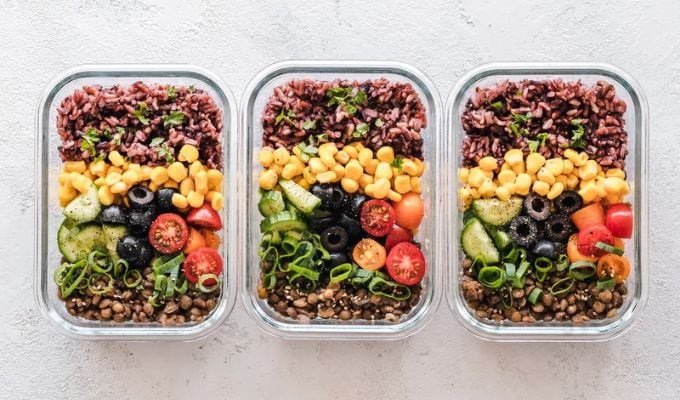
A few simple habits can help keep your food storage containers in good shape and your food fresh.
- Clean and dry thoroughly. Wash containers and lids according to the manufacturer’s instructions, and allow them to dry completely before storing to help prevent lingering odors and moisture buildup.
- Follow temperature guidelines. Check the manufacturer’s instructions before using containers in the freezer, microwave or oven. Not all containers and lids are designed for the same temperatures.
- Avoid sudden temperature changes. Glass can crack from thermal shock, so don’t move a cold container directly into a hot oven or place a hot container on a cold surface.
- Leave room when freezing food. Liquids expand as they freeze, so leave some space at the top of your container to help prevent cracking or leaks.
- Inspect containers regularly. Replace glass containers with chips or cracks and lids or seals that are damaged or no longer fit properly.
We also have a roundup of reusable lunch containers if you are in need of any.
Frequently Asked Questions About Food Storage Containers
Are glass food storage containers safer than plastic?
Glass food storage containers have several advantages over plastic. They’re nonporous, don’t absorb food odors or stains as easily, and can often be used for both food storage and reheating. They’re also a good option if you’re looking to reduce plastic food contact in your kitchen. The trade-offs are that glass is heavier and can break.
How long do food storage containers last?
The lifespan of food storage containers depends on the material, quality and how they’re used. Durable glass and stainless steel containers can last for many years with proper care. Silicone bags are also reusable for a long time, although they may eventually show signs of wear. Lids and seals often need replacing sooner than the containers themselves.
How do I keep food storage containers from retaining odors?
Wash containers promptly after use, especially after storing foods with strong odors like tomato sauce, garlic or onions. Baking soda and warm water can help with lingering smells. Make sure containers and lids are completely dry before putting them away.
What is the best way to organize food storage containers?
Choose containers in a variety of useful sizes that stack neatly and have lids that are easy to match. I also recommend storing lids separately or using a lid organizer to keep cupboards from becoming a jumbled mess. Caraway’s food storage containers come with a handy organizer that I really appreciate!
What food storage containers work best for you? Let us know in the comments