
Best Non-Toxic Cutting Boards: Safe, Non-Plastic Options for Every Kitchen
Looking for the safest cutting board? Discover the best non-toxic cutting boards made from wood, bamboo, silicone and glass. These non-plastic options help reduce microplastic exposure in your kitchen.
Microplastics. You’ve probably heard of them. But did you know that your plastic cutting board could be a significant source of microplastics in your food? No thank you!
If you’re wondering what the healthiest cutting board material is, many experts recommend choosing a non-plastic cutting board whenever possible. As knives repeatedly slice and chop on plastic surfaces, tiny plastic particles can be released and potentially end up in your food.
That’s why we’ve researched the best non-toxic cutting boards made from safer materials like wood, bamboo, paper composite, silicone, and glass. Whether you’re looking for the safest cutting board for everyday meal prep or simply want to reduce your family’s exposure to microplastics, there are plenty of great options to choose from.
Whether you need an affordable but safe cutting board, something lightweight and dishwasher-safe, or a beautiful wooden cutting board that doubles as a serving board, we’ve got you covered.
At Mindful Momma we only endorse products we’ve personally researched, tested, and honestly love. We may receive commissions from affiliate links in this article including Amazon Affiliates. Full Disclosure
What Is the Safest Cutting Board Material?
he safest cutting board material depends on your cooking style and personal preferences, but many people choose non-plastic cutting boards to reduce exposure to microplastics. Here are some of the healthiest cutting board materials to consider:
- Wood: Durable, knife-friendly, and naturally beautiful. Hardwoods like maple, walnut, and cherry are popular choices.
- Bamboo: Lightweight, affordable, and made from a rapidly renewable resource.
- Paper Composite: Non-porous, dishwasher-safe, and easier on knives than glass.
- Silicone: Flexible, lightweight, and simple to clean.
- Glass: Non-porous and easy to sanitize, though it can dull knives more quickly than other materials.
The best non-toxic cutting board is the one that fits your cooking habits while avoiding unnecessary exposure to plastic particles and other potentially harmful materials.
Birch Wood Cutting Board Set from Caraway
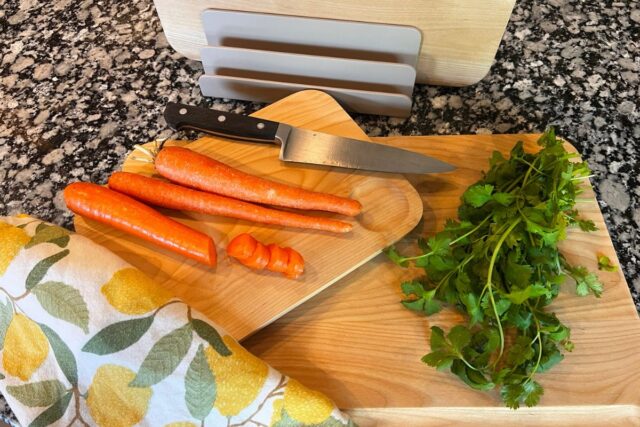
Utilitarian and easy on the eye, this set of 3 cutting boards is made from FSC-certified birch wood and finished with food-safe mineral oil & wax. Set includes a storage rack to store boards upright and out of the way. Perfect for a kitchen refresh or would make a great gift idea!
Code MINDFULMOMMA will get your 10% off your order!
Solid Sapele Wood One-Piece Cutting Board
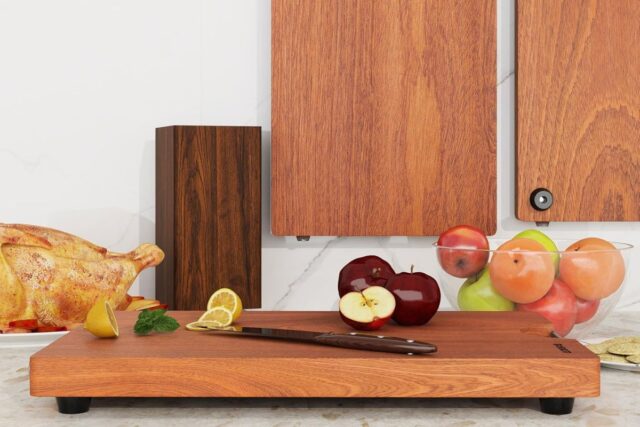
Sapele is an African hardwood that is resistant to warping and cracking, making it a great material for cutting boards. This Sapele cutting board is made from a single piece of wood without the need for glues or adhesives. Comes with rubber feet to prevent slips and ensure stability while cutting.
Epicurean Paper Composite Cutting Board
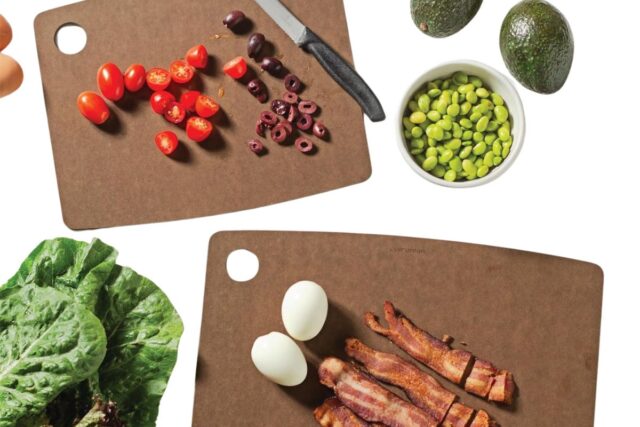
Epicurean makes durable yet lightweight cutting boards from a paper composite material. Many readers ask whether Epicurean cutting boards are non-toxic, and they’re one of my favorite alternatives to plastic cutting boards because they’re NSF certified for food-contact safety and made without plastic. That means you won’t have the same microplastic concerns associated with traditional plastic cutting boards.
Made in the USA, Epicurean boards are thin, easy to store, and dishwasher safe (although I’ve never put mine in the dishwasher). They also come with a limited lifetime warranty, making them a practical choice for busy kitchens.
Bambu Formaldehyde-Free Bamboo Cutting Boards
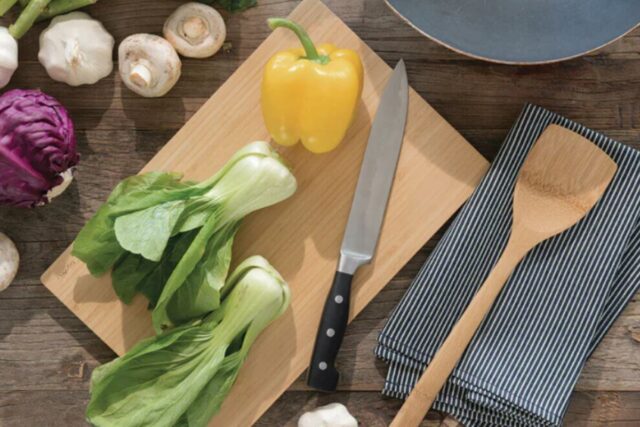
Sustainably harvested bamboo is the material used for these pretty cutting boards from Bambu. They are constructed from FSC®-certified 100% bamboo, using a water-based, food-grade adhesive that contains no formaldehyde. The boards are then finished with food-safe wood oil. The set of two includes a medium and a large board.
Find our favorite non-toxic cooking utensils too!
Silicone Dishwasher Safe Cutting Boards
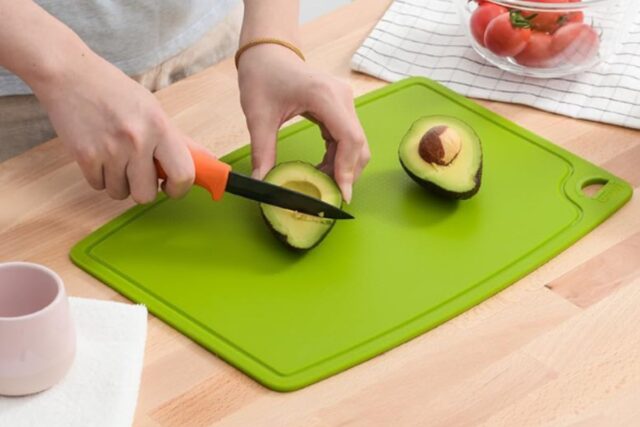
Looking for a cutting board that’s similar to plastic, but safer? You’ll love these silicone cutting boards made from 100% food grade silicone. They are lightweight, flexible, stain resistant and best of all – dishwasher safe! Available in a bunch of bright colors.
Maple Carving Board with Handles
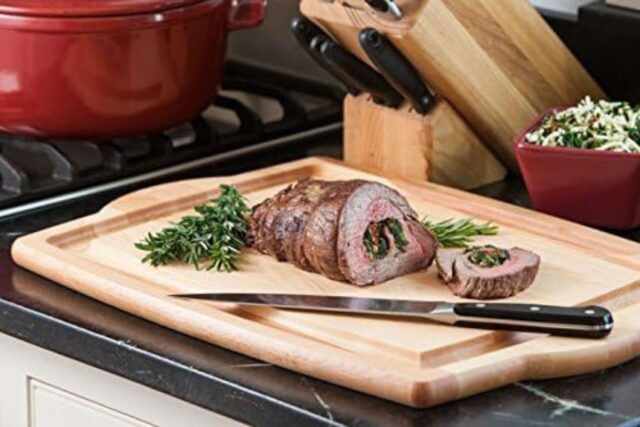
This multi-tasking cutting & carving board is great for everything from chopping vegetables to slicing meats. It’s made in Vermont from beautiful maple wood and finished with mineral oil and beeswax. It features a generous juice groove and handles that make it easy to carry.
Walnut Cutting Board from Our Place
Discover our favorite cookware pans too!
Cherry Farmhouse Cutting Board with Handle
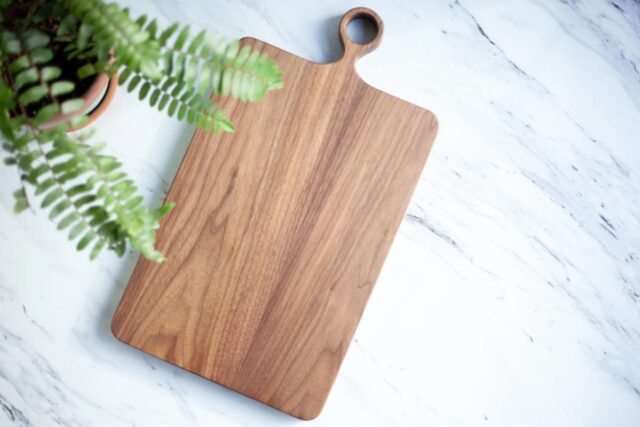
Whether it’s a gift for yourself or for someone else, this stunning handmade cutting board is sure to please! Available in maple, cherry or walnut woods, these boards are constructed from solid wood with no glues and rubbed with an all-natural, beeswax and organic coconut oil polish.
Tempered Glass Cutting Boards
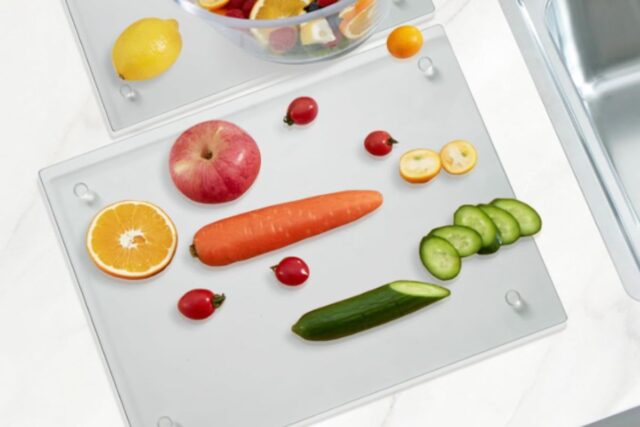
If you are someone who prefers a glass cutting board, you will be happy with this set of two tempered glass boards. They are high temperature resistant and have non-slip feet on the bottom to ensure stability.
Are Plastic Cutting Boards Safe?
Plastic cutting boards have long been considered a practical and affordable option, but recent research has raised concerns about their potential to shed microplastics as they become worn from repeated cutting and chopping.
While health experts are still studying the long-term effects of microplastic exposure, many people (including myself!) prefer to choose non-plastic cutting boards made from materials like wood, bamboo, paper composite, silicone, or glass. These alternatives can help reduce exposure to plastic particles while providing a durable and functional surface for food preparation.
If you’re looking for the safest cutting board for your kitchen, a high-quality non-toxic cutting board made from one of these materials is a great place to start.
We have plenty of recommendations for plastic-free food storage too!
Frequently Asked Questions About Non-Toxic Cutting Boards
What is the best non-plastic cutting board?
The best non-plastic cutting board depends on your needs and preferences. Wood cutting boards are durable and gentle on knives, bamboo is lightweight and affordable, paper composite boards are dishwasher-safe, silicone boards are flexible and easy to clean, and glass boards are non-porous and highly durable.
What cutting board materials don’t release microplastics?
Wood, bamboo, paper composite, silicone, and glass cutting boards do not release plastic particles in the same way that traditional plastic cutting boards can. For this reason, many people choose these materials when looking to reduce exposure to microplastics in the kitchen.
Are Epicurean cutting boards non-toxic?
Epicurean cutting boards are made from a durable paper composite material and are NSF certified for use in commercial kitchens. Because they contain no plastic and are made with food-safe materials, many people consider them a safer alternative to traditional plastic cutting boards.
Are bamboo cutting boards safe?
Yes, bamboo cutting boards are generally considered safe when made with food-safe adhesives and finishes. Bamboo is a durable, renewable material that is naturally resistant to moisture, making it a popular choice for eco-conscious kitchens.
If you’re looking for more non-toxic products for the kitchen we’ve got you covered!