
Switch to Plastic-Free Tea Bags NOW!
Find out which brands offer 100% plastic-free tea bags, so you can avoid microplastics and chemicals in your favorite brew.
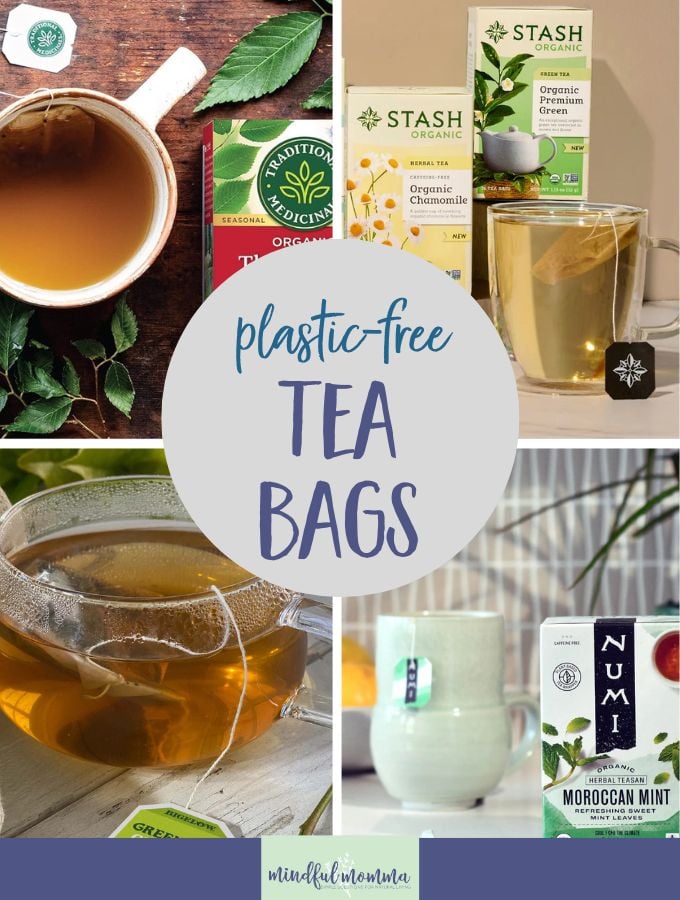
Plastic in tea bags? Who knew?!! I was pretty shocked when I first learned this not-so-fun fact.
And when you dunk those bags into hot water, you’re getting microplastics along with your tea. Yuck!
But worry not! We’ve done the research to find out which brands have completely plastic-free tea bags, so you can sip your tea without concern.
At Mindful Momma we only endorse products we’ve personally researched, tested, and honestly love. We may receive commissions from affiliate links in this article including Amazon Affiliates. Full Disclosure
Why Do Tea Bags Contain Plastic?
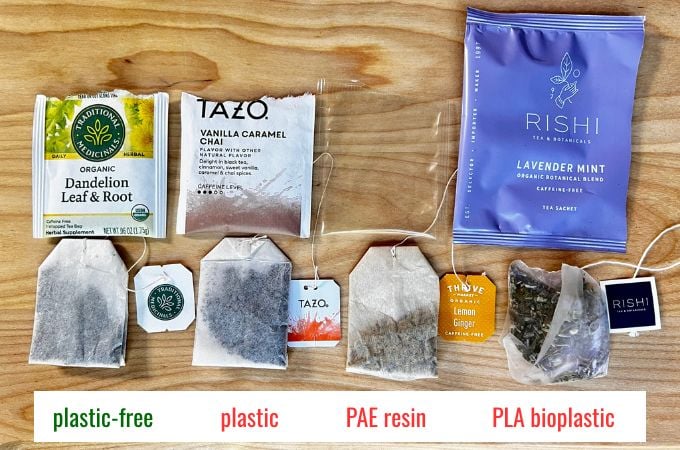
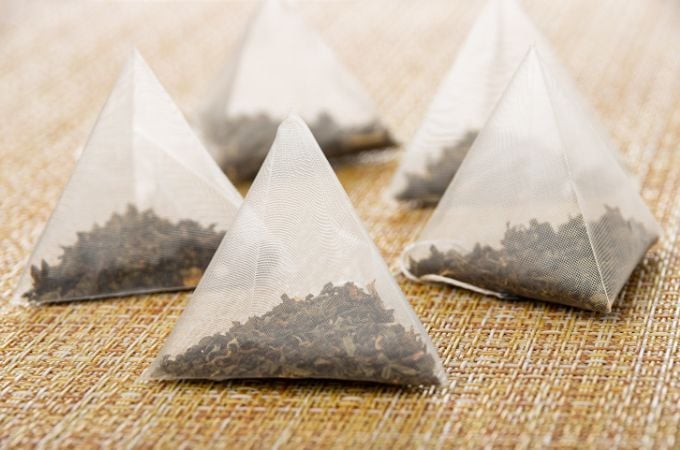
There are a couple different ways plastic is used in tea bags. Some tea bags are made almost entirely from plastic (typically nylon or PET polyethylene terephthalate), like those silky pyramid shaped bags that are common for fancy teas.
The pyramid design gives the tea leaves room to expand in hot water, making it more similar to brewing loose tea. This type of tea bag has a high risk for microplastics, which we will discuss below. Some sachets use PLA bio-plastic, but this type can still release microplastics.
Other tea bags appear to be paper, but they can actually have a small amount of plastic mixed into them. Polypropylene (PP) is used to provide structure to the bag and to allow for heat sealing of the bag. PAE, which is a synthetic resin, is used to help tea bags hold up in water. The concern with PAE is that it can contain epichlorohydrin, which is classified as a possible carcinogen.
The Problem with Microplastics
Whichever type of plastic tea bag you are using, the process of steeping it in hot water means that microplastics are getting released into the water along with the tea….and then you are drinking them.
Scientists have been worried about the health impacts of microplastics for many years and studies have shown links to disrupted immune function and a higher risk of heart attack and stroke.
While the occasional cup of microplastics (in your tea) is not going to directly cause an early demise, switching to plastic-free tea bags or loose leaf tea is a practical way to reduce your exposure to microplastics. I’d say it’s worth it!
Want to learn more? See my guide about how to reduce microplastic exposure for practical changes you can make around your home.
Brands With Plastic-Free Tea Bags
Luckily at this point, many brands have gotten the anti-plastic memo. You can dunk your tea bags without worry when you use brands like the ones listed below.
You’ll also find my favorite flavors for each brand – I’m a big herbal tea drinker – especially in the evening time!

Traditional Medicinals
Traditional Medicinals has been brewing up wellness focused teas since the 1970’s. Most of them are USDA Certified Organic and some use Fair Trade Certified tea leaves.
- Tea bags made from: sustainably harvested abacá fiber (a plant from the banana family) and FSC-certified wood pulp. They are fully compostable and non-heat sealed.
- Peroxide and oxygen are use to clean the tea bag fiber and elemental chlorine is not used at all.
- The string is made from Non-GMO Project verified cotton and the tag is made from FSC-certified paper.
- Their new tea bag wrapper is completely compostable as well.
- Tea types: herbal and green tea
- My favorites: Nighty Night, Throat Coat, Echinacea Plus
- Learn more in our review of Traditional Medicinals tea
Yogi Tea
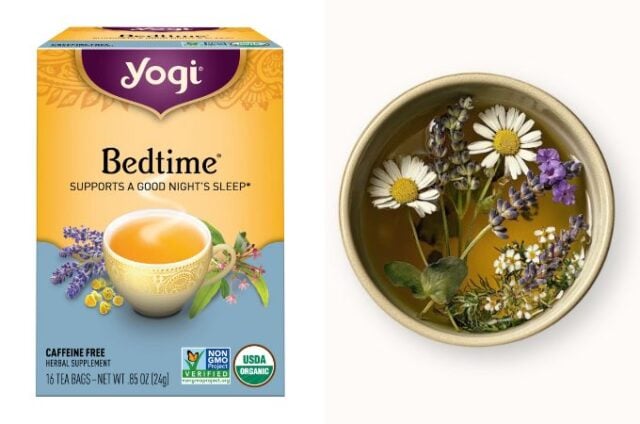
Yogi has been creating tea blends guided by the principles of Ayurveda for over 50 years. They are very dedicated to sustainability and fair collaborations with suppliers. Most of their teas are certified organic and 100% of their suppliers use at least one regenerative farming practice.
- Tea bags made from: filtration paper made from a select blend of high-quality manila hemp (abaca) fibers or bamboo fibers and wood pulp.
- The bag components are compostable with the exception of the staples used to seal the bag and attach the tag on some teas.
- The outer envelopes are not compostable due to the protective lining that acts as a food safety barrier, eliminating the need for cellophane wrap.
- Tea types: herbal, green and black teas
- My favorites: Egyptian Licorice, Bedtime, Honey Lavender Stress Relief
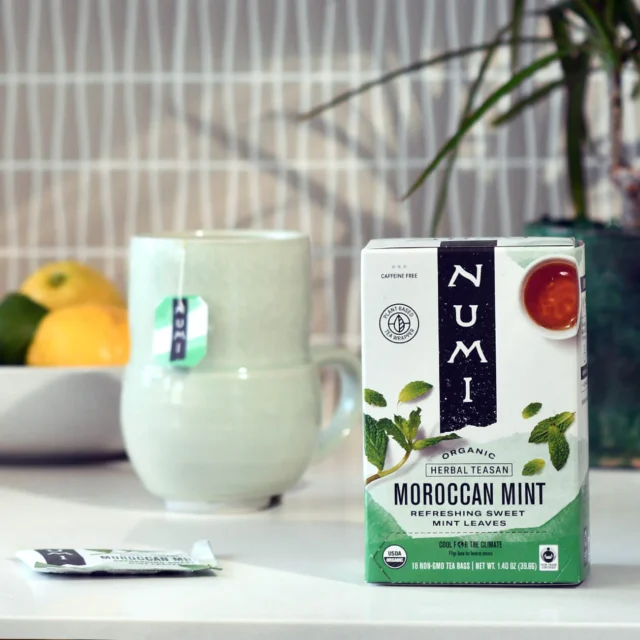
Numi Organic
All of Numi Organic’s teas are USDA Certified Organic and they have decades long relationships with their tea farmers. They use only fuller leaf teas (for the best flavor) and 100% real fruits, flowers and spices (no “natural” or artificial flavorings.)
- Tea bags made from: manila hemp cellulose (plant fiber). They are compostable, Non-GMO Verified, and unbleached,
- The tag is made from 100% recycled materials and soy-based inks and the strings are made from cotton.
- Their compostable, plant-based tea wrappers are plastic-free and an award-winning design.
- Tea types: herbal, green, white and black teas
- My favorites: Moroccan Mint, Jasmine Green, Rooibos Chai
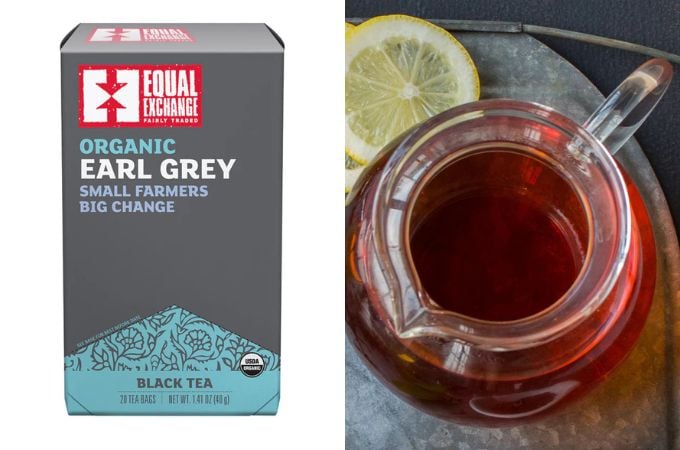
Equal Exchange
Equal Exchange started in the 1980’s with a fair trade model that empowers small farmers. Their teas are USDA Organic and fairly traded through their Authentic Fair Trade program.
- Tea bags made from: a special blend of abaca material, which is a relative of the banana tree family (also known as manila hemp.)
- The tea envelope is made from paper coated with a high-barrier EVOH polymer to preserve product freshness and shelf life.
- Tea types: herbal, green and black teas
- My favorites: Earl Grey, Irish Breakfast, Peppermint
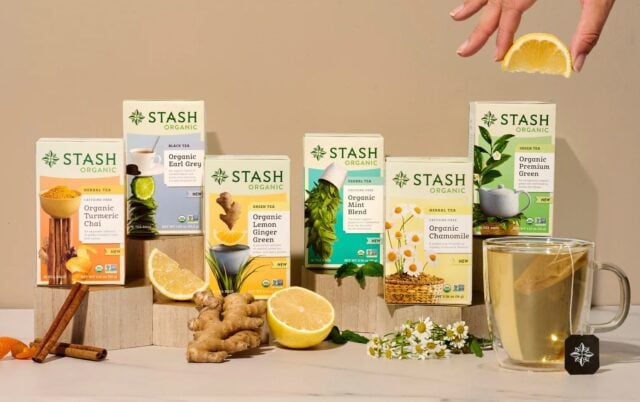
Stash
Stash was founded in the 1970’s in a basement in Portland, OR and over time grew to be a very popular brand. A selection of their teas are certified organic, but most are not.
- Tea bags made from: paper made from 100% cellulose fibers (wood) with no glue used. The teabags are completely compostable and do not contain any plastic.
- Tests show filter paper is free from chlorine dioxide and epichlorohydrin.
- Tea types: herbal, green, white and black teas
- My favorites: Organic Chamomile
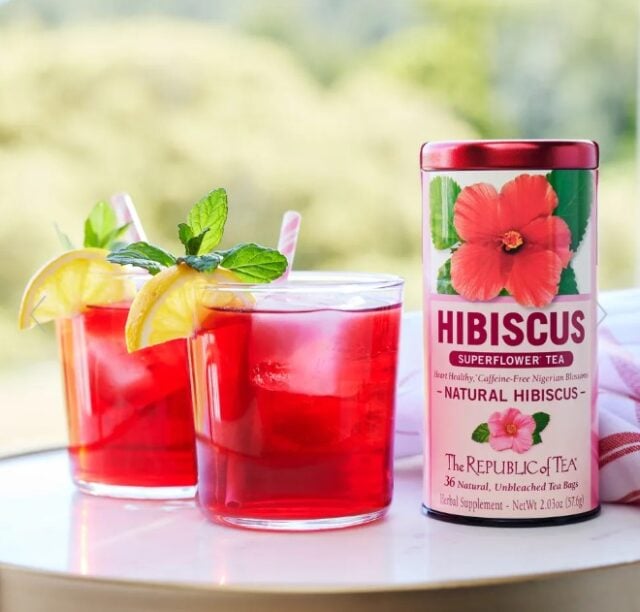
Republic of Tea
Republic of Tea is a newer company, founded in 1992 by a group of tea lovers who wanted to start a “tea revolution.” They package their tea in unique round tea bags and recyclable and reusable round steel tins. I’ve given them as gifts many times! Quite a few blends are certified organic, but not all of them.
- Tea bags made from: unbleached tea paper made from wood pulp fibers that is free of chemicals and chlorine-containing compounds.
- The round tea bags are free of excess wrapping, strings, tags and staples.
- Tea types: herbal, green, white and black teas
- My favorites: Natural Hibiscus (it’s great iced!)
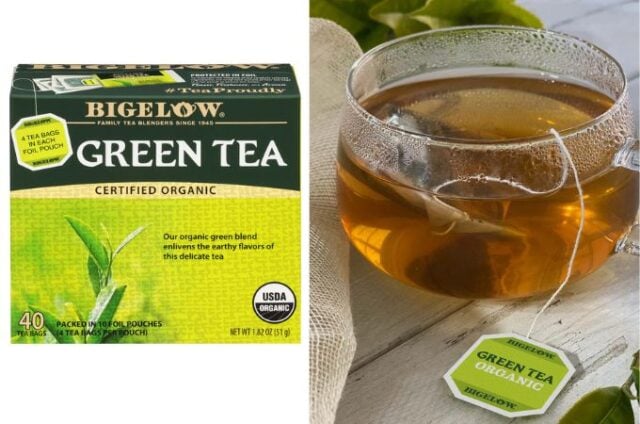
Bigelow
Bigelow is a family owned and operated tea company that is easy to find in many stores. Some of their teas are organic, but that is not their primary focus.
- Tea bags made from: compostable, plant-based material including wood pulp and abaca fibers.
- Tea types: herbal, green, white and black teas
- My favorites: My mom always had Constant Comment black tea in the house. I appreciate their certified organic green tea.
By the way, if you love coffee too – we’ve got a roundup of our favorite organic coffee brands!
Tea Brands to Skip or Limit
Unfortunately, tea bags made with plastic are still the industry standard. Given the ongoing research about microplastics, I’m hopeful that this standard will change over time.
Clearly, it is POSSIBLE to make plastic-free tea bags, so there’s no excuse for these brands that are still hanging on to old methods.
These tea brands most likely use plastic of some form in their tea bags:
- Lipton (probably the most common tea in the United States)
- Twinings (another very popular brand)
- Celestial Seasonings (so sad – I grew up drinking this tea!)
- Tazo (bummer, because I love some of their blends)
- Rishi Tea (sachets are PLA, a plant-based bioplastic)
- Tetley Tea (a popular British brand, not sure if I’ve tried it)
- Thrive Market (they use a small amount of resin to give the bags strength when wet and the bags are packaged in a plastic wrapper – such a bummer!)
What’s your favorite brand and flavor of tea? Leave a comment, we’d love to know!



Here in Australia, I am pretty certain that Pukka organic green and herbal tea does not contain microplastics. I drink it everyday with a teaspoon of Best of the Bone Broth organic mushroom or turmeric, 1 teaspoon of raw honey, 1 teaspoon of organic black molasses, 1 teaspoon of organic decaf coffee, and 2 teaspoons of organic maple syrup. I then pour in the leftover filtered water from my steam pressure cooked vegetables. The taste is out of this world. It took me a long time to discover the perfect recipe and this is it. Well, for me anyway. Ha-ha. Do enjoy.
Can I cut open the teabags and just use the leaves in a strainer without the teabag? I hate throwing away boxes of tea.
I would think that would be fine. Definitely don’t waste the tea!